AI Ethical Breaches: Navigating the $5 Million Fine in 2026

The rapid advancement of Artificial Intelligence (AI) has ushered in an era of unprecedented innovation and transformative potential across every sector. From healthcare diagnostics to financial trading and personalized customer experiences, AI is reshaping how businesses operate and interact with the world. However, this technological revolution comes with a profound responsibility. As AI systems become more autonomous, sophisticated, and integrated into critical decision-making processes, the ethical implications and potential for harm escalate significantly. The global regulatory landscape is struggling to keep pace, but the message is clear: the era of self-regulation in AI is drawing to a close, and a new era of stringent accountability is dawning.
We are standing at the precipice of a significant paradigm shift, where the cost of neglecting ethical AI development and deployment will no longer be merely reputational. By 2026, industry experts and regulatory bodies project that the average fine for AI ethical breaches could reach a staggering $5 million. This isn’t just a hypothetical figure; it represents a tangible and formidable financial threat that organizations worldwide must prepare for. The concept of AI compliance fines is moving from a distant concern to an immediate and pressing reality for any enterprise leveraging AI.
This article delves deep into the implications of these impending penalties, exploring the multifaceted nature of AI ethical breaches, the driving forces behind increased regulatory scrutiny, and the concrete steps organizations can take to mitigate their risks. Understanding the financial impact of non-compliance is no longer optional; it is a critical component of strategic planning and risk management in the age of AI. The time to act and build a robust framework for ethical AI governance is now, before the specter of a $5 million fine becomes a stark reality.
The Evolving Landscape of AI Regulation and AI Compliance Fines
The journey towards comprehensive AI regulation is a complex tapestry woven from various international and national initiatives. While a single, globally harmonized framework remains elusive, a clear trend towards increased oversight and accountability is undeniable. Major legislative efforts, such as the European Union’s AI Act, are setting significant precedents, establishing risk-based classifications for AI systems and imposing strict requirements for high-risk applications. Similar legislative discussions are underway in the United States, the UK, and other jurisdictions, each aiming to address concerns ranging from data privacy and algorithmic bias to transparency and human oversight.
These regulatory developments are not merely academic exercises; they carry real teeth. The proposed EU AI Act, for instance, includes provisions for fines that could reach up to 7% of a company’s global annual turnover or €35 million, whichever is higher, for severe breaches. While the $5 million average fine by 2026 is an industry projection, it is firmly rooted in the direction these legislative frameworks are taking. This projection serves as a stark warning, signaling that authorities are increasingly empowered and willing to impose substantial penalties for failures in AI governance.
The shift towards stricter enforcement is driven by several factors. Firstly, the public’s growing awareness and concern regarding AI’s potential societal impact, particularly concerning issues like privacy violations, discriminatory algorithms, and misuse in critical sectors. Secondly, the increasing maturity of AI technology itself means that its impact is no longer theoretical but demonstrably real, necessitating robust safeguards. Lastly, governments and international bodies recognize the need to foster trust in AI to ensure its sustainable development and adoption, and effective regulation is seen as a cornerstone of building that trust.
Defining AI Ethical Breaches: Beyond the Obvious
What exactly constitutes an ‘AI ethical breach’ that could lead to such substantial AI compliance fines? The definition is broad and multifaceted, extending far beyond intentional malicious acts. It encompasses a range of failures in the design, development, deployment, and monitoring of AI systems. Key areas of concern include:
- Algorithmic Bias: This is arguably one of the most widely discussed and potentially damaging ethical breaches. If an AI system, due to flawed data or design, produces systematically unfair or discriminatory outcomes against certain demographic groups, it can lead to significant legal and reputational repercussions. Examples include biased lending algorithms, discriminatory hiring tools, or facial recognition systems with lower accuracy for certain ethnicities.
- Privacy Violations: AI systems often rely on vast datasets, many of which contain personal or sensitive information. Breaches of data privacy, whether through inadequate data protection, unauthorized access, or the use of data for purposes beyond its original consent, fall squarely into the realm of ethical and legal violations. Compliance with GDPR, CCPA, and similar data protection laws is paramount.
- Lack of Transparency and Explainability (XAI): The ‘black box’ nature of many advanced AI models poses a significant challenge. When decisions made by AI systems cannot be understood or explained to affected individuals, it erodes trust and makes accountability difficult. Regulations are increasingly demanding greater transparency, especially for high-risk AI applications.
- Inadequate Human Oversight and Control: While AI can automate many tasks, critical decisions, particularly those with significant impact on individuals, should ideally retain a degree of human oversight. The failure to implement effective human-in-the-loop or human-on-the-loop mechanisms can be considered an ethical breach, especially if autonomous AI causes harm.
- Security Vulnerabilities: Compromised AI systems can lead to a cascade of ethical issues, from data breaches to the manipulation of AI outputs for malicious purposes. Ensuring the robust security of AI models and their underlying data is a fundamental ethical responsibility.
- Misuse and Harmful Applications: Deploying AI for purposes that are inherently harmful, such as autonomous weapons systems without proper ethical frameworks, or applications that contribute to disinformation or social manipulation, represents the most severe end of the ethical breach spectrum.
Each of these areas presents a potential vector for financial penalties and reputational damage. Organizations must conduct thorough ethical impact assessments and integrate ethical considerations at every stage of the AI lifecycle to avoid these pitfalls and minimize the risk of incurring substantial AI compliance fines.
The Direct Financial Impact: Understanding the $5 Million Average Fine
The projection of a $5 million average fine by 2026 for AI ethical breaches is not an arbitrary figure. It reflects a confluence of factors, including the increasing scope and severity of regulatory frameworks, the growing expertise of enforcement agencies, and the escalating scale of potential harm caused by AI failures. This average fine represents a significant financial burden that can cripple smaller enterprises and severely impact the bottom line of even large corporations.
Consider the direct costs:
- Regulatory Penalties: This is the most straightforward cost. Fines levied by regulatory bodies can be substantial, as seen with GDPR penalties that have reached hundreds of millions of euros. As AI regulations mature, similar or even higher penalties are anticipated, directly contributing to the projected $5 million average.
- Legal Fees and Litigation: Defending against accusations of ethical breaches, whether from regulatory bodies or private litigants, involves extensive legal costs. This includes fees for lawyers, expert witnesses, court costs, and potential settlement payouts. A single class-action lawsuit related to algorithmic discrimination could easily exceed the $5 million mark.
- Remediation Costs: When an AI system is found to be in breach, organizations will incur significant costs to fix the problem. This could involve re-training models, redesigning algorithms, re-engineering data pipelines, or even completely decommissioning and rebuilding systems. These technical remediation efforts are often complex and expensive.
- Data Breach Costs: If an ethical breach involves a data privacy violation, the costs extend to notifying affected individuals, providing credit monitoring services, managing public relations crises, and implementing enhanced security measures, all of which contribute to the overall financial impact.
Beyond these direct financial outlays, there are significant indirect costs that can be even more damaging in the long run:
- Reputational Damage: An ethical breach can severely tarnish an organization’s brand image, leading to a loss of customer trust, investor confidence, and talent acquisition difficulties. Rebuilding a damaged reputation can take years and require substantial marketing and PR investments.
- Loss of Market Share: Customers are increasingly discerning about the ethical practices of companies they patronize. A major AI ethical scandal can lead to boycotts, switching to competitors, and a significant loss of market share.
- Operational Disruption: Investigating and addressing an ethical breach can divert significant internal resources, disrupting normal business operations and hindering innovation.
- Increased Scrutiny: Organizations found in breach may face heightened scrutiny from regulators, investors, and the public for years to come, leading to more frequent audits and compliance checks.
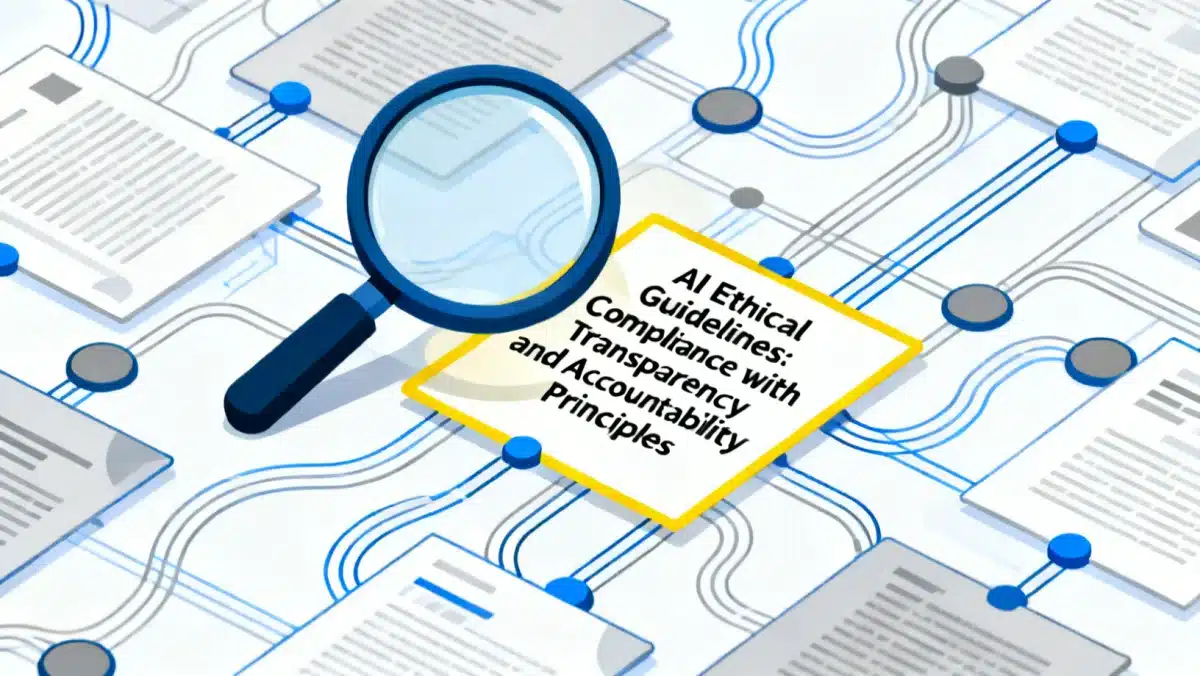
The $5 million average fine, therefore, represents not just a potential line item on an income statement, but a potent indicator of the profound and multifaceted financial repercussions awaiting organizations that fail to prioritize ethical AI development and robust compliance. The stakes are incredibly high, making proactive governance an absolute necessity.
Building a Robust AI Governance Framework to Avoid AI Compliance Fines
Given the significant financial and reputational risks associated with AI ethical breaches, organizations must adopt a proactive and comprehensive approach to AI governance. This involves integrating ethical considerations and compliance requirements into every stage of the AI lifecycle, from conception to deployment and ongoing monitoring. A robust AI governance framework is not merely a checklist; it’s a strategic imperative.
1. Establish a Dedicated AI Ethics & Governance Committee
The first step is to create a cross-functional committee responsible for overseeing all AI-related ethical and compliance matters. This committee should include representatives from legal, compliance, IT, data science, product development, and even external ethics experts. Their mandate should include:
- Defining and communicating clear ethical AI principles aligned with organizational values and regulatory requirements.
- Developing policies and procedures for ethical AI development and deployment.
- Conducting ethical impact assessments for all new AI projects.
- Monitoring the AI regulatory landscape and ensuring ongoing compliance.
- Providing training and awareness programs for all employees involved with AI.
2. Implement AI Ethical Impact Assessments (EIAs)
Similar to privacy impact assessments, EIAs should be mandatory for all AI projects, particularly those classified as ‘high-risk.’ An EIA systematically evaluates the potential ethical risks and societal impacts of an AI system before it is developed and deployed. This includes:
- Identifying potential biases in data and algorithms.
- Assessing privacy implications and data handling practices.
- Evaluating transparency and explainability requirements.
- Considering human oversight and control mechanisms.
- Analyzing potential for misuse or unintended negative consequences.
The EIA should be an iterative process, reviewed at different stages of development and updated as the AI system evolves.
3. Prioritize Data Governance and Quality
The adage ‘garbage in, garbage out’ is particularly pertinent to AI. Biased or poor-quality data is a primary source of algorithmic bias and ethical breaches. Organizations must invest in robust data governance practices, including:
- Establishing clear data collection, storage, and usage policies.
- Implementing rigorous data anonymization and pseudonymization techniques.
- Conducting regular data audits to identify and mitigate biases.
- Ensuring data lineage and provenance are meticulously documented.
4. Design for Transparency and Explainability (XAI)
Where possible, prioritize AI models that offer a degree of transparency and explainability. For complex ‘black box’ models, invest in explainable AI (XAI) techniques that can help interpret model decisions. This is crucial for:
- Building trust with users and stakeholders.
- Meeting regulatory requirements for explainability.
- Facilitating internal auditing and debugging of AI systems.
- Enabling human oversight and intervention.
5. Implement Robust Security Measures for AI Systems
AI models and their underlying data are attractive targets for cyberattacks. Implementing strong cybersecurity protocols is an ethical imperative to prevent data breaches, model poisoning, and other malicious manipulations. This includes:
- Securing data storage and transmission.
- Protecting AI models from adversarial attacks.
- Implementing access controls and regular security audits.
6. Foster a Culture of Ethical AI
Ultimately, technology alone cannot ensure ethical AI. It requires a fundamental shift in organizational culture. This involves:
- Providing ongoing training and education on AI ethics for all relevant employees.
- Encouraging open dialogue and reporting of ethical concerns without fear of reprisal.
- Integrating ethical considerations into performance reviews and reward systems.
- Leadership commitment and visible advocacy for ethical AI practices.
By embedding these principles and practices throughout the organization, companies can significantly reduce their exposure to AI compliance fines and build a foundation of trust and responsibility in their AI initiatives.
The Future of AI Regulation: What to Expect Beyond 2026
The projected $5 million average fine by 2026 is merely a waypoint on a longer journey towards comprehensive AI regulation. The landscape will continue to evolve rapidly, driven by technological advancements, emerging ethical challenges, and increased global collaboration. Organizations must view their AI governance strategies not as static documents but as dynamic frameworks that adapt to change.
Increased Granularity in Regulations
Expect future regulations to become even more granular, potentially focusing on specific AI applications, industries, or technological components. For example, regulations for AI in healthcare might differ significantly from those in finance or autonomous vehicles. This will require organizations to tailor their compliance efforts more precisely.
Greater Emphasis on Accountability and Liability
The question of who is ultimately responsible when an AI system causes harm is a complex one. Future regulations are likely to clarify liability frameworks, potentially extending responsibility to developers, deployers, and even data providers. This will necessitate robust contractual agreements and insurance mechanisms.
International Harmonization Efforts
While complete global harmonization is unlikely in the short term, expect increased efforts by international bodies (e.g., OECD, UN) to establish common principles and interoperable regulatory standards. This could simplify compliance for multinational corporations but will still require navigating nuanced national differences.
The Rise of AI Auditors and Certification
Just as financial audits are mandatory, we may see the emergence of specialized AI auditors and certification bodies that verify the ethical compliance and safety of AI systems. Obtaining such certifications could become a competitive advantage and a requirement for market access.
Focus on Systemic Risks
Beyond individual AI systems, regulators will increasingly focus on the systemic risks posed by the widespread adoption of AI, such as market manipulation, social polarization, or critical infrastructure vulnerabilities. This will require a broader, ecosystem-level approach to AI governance.

Preparing for these future developments means fostering a culture of continuous learning and adaptation within the organization. Staying abreast of regulatory changes, participating in industry dialogues, and investing in flexible governance structures will be key to navigating the evolving landscape and avoiding unforeseen AI compliance fines.
The Business Case for Ethical AI: Beyond Avoiding Fines
While avoiding the looming $5 million average fine is a compelling motivator, the business case for prioritizing ethical AI extends far beyond mere compliance. Organizations that proactively embrace ethical AI principles stand to gain significant competitive advantages:
- Enhanced Trust and Reputation: In an era of increasing public skepticism, companies known for their ethical AI practices will build stronger trust with customers, partners, and employees, leading to enhanced brand loyalty and a positive public image.
- Innovation and Sustainable Growth: Ethical considerations can actually spur innovation, leading to the development of more robust, fair, and user-centric AI solutions. A focus on ethics can also help identify new market opportunities for responsible AI products and services, fostering sustainable long-term growth.
- Attracting and Retaining Talent: Top AI talent is increasingly seeking employers who demonstrate a strong commitment to ethical practices. A clear ethical stance and robust governance framework can be a powerful tool for attracting and retaining the best minds in the field.
- Reduced Risk and Greater Stability: Proactive ethical AI governance effectively mitigates legal, regulatory, and reputational risks, leading to greater operational stability and fewer costly disruptions.
- Competitive Differentiation: As AI becomes more ubiquitous, ethical deployment will emerge as a key differentiator. Companies that can credibly demonstrate their commitment to responsible AI will gain a significant edge in the marketplace.
The investment in ethical AI governance should not be viewed as a cost center but as a strategic investment that yields tangible returns. It’s about future-proofing the business, building resilience, and unlocking the full, positive potential of AI while responsibly managing its inherent risks. The projected AI compliance fines serve as a powerful reminder of the financial consequences of inaction, but the true reward lies in the long-term value and trust that ethical AI can cultivate.
Conclusion: Proactive Governance is the Only Path Forward
The dawn of 2026 brings with it the very real prospect of a $5 million average fine for AI ethical breaches. This projection underscores a critical message for every organization leveraging or planning to leverage AI: the era of lax oversight is over. The financial impact of non-compliance is no longer a distant possibility but an imminent threat that demands immediate and strategic attention.
Successfully navigating this complex and rapidly evolving landscape requires more than just a superficial nod to ethics. It necessitates the establishment of a comprehensive, proactive, and continuously evolving AI governance framework. This framework must encompass dedicated ethical leadership, rigorous impact assessments, robust data governance, a commitment to transparency, strong security measures, and, most importantly, a deeply embedded culture of ethical responsibility throughout the organization.
The organizations that will thrive in the AI-driven future are not those that merely react to regulatory pressures, but those that proactively embrace ethical AI as a core strategic imperative. By doing so, they not only mitigate the risk of substantial AI compliance fines but also unlock immense opportunities for innovation, build enduring trust with stakeholders, and contribute to a more responsible and beneficial deployment of artificial intelligence for all. The time to invest in ethical AI governance is now, ensuring that your organization is prepared for the challenges and poised to seize the opportunities that lie ahead.