AI’s Economic Impact on US Small Businesses: 5% Productivity Boost by 2026

The Economic Impact of AI on US Small Businesses: Projecting a 5% Productivity Increase by End of 2026
The dawn of artificial intelligence (AI) is not merely a technological evolution; it is a profound economic revolution, particularly for the backbone of the American economy: small businesses. As AI technologies become more accessible and sophisticated, their integration into daily operations is no longer a luxury but a strategic imperative. This article delves into the multifaceted economic impact of AI on US small businesses, forecasting a significant 5% productivity increase by the end of 2026. This projection is not just an arbitrary number; it reflects a growing consensus among economists and industry experts who recognize AI’s transformative potential to streamline processes, enhance decision-making, and unlock new avenues for growth.
For decades, small businesses have grappled with resource constraints, limited access to advanced technologies, and intense competition. However, AI is leveling the playing field, offering tools that were once exclusive to large corporations. From automating mundane tasks to providing sophisticated data analytics, AI is empowering small business owners to operate with unprecedented efficiency and insight. The projected 5% productivity increase signifies a substantial boost in output relative to input, translating directly into higher profitability, increased market competitiveness, and ultimately, a stronger national economy. This isn’t just about doing more with less; it’s about doing better with smarter tools.
Understanding this impact requires a comprehensive look at various sectors and how AI is being adopted. We will explore the tangible benefits, the challenges, and the strategic approaches small businesses can employ to harness AI effectively. The goal is to provide a clear roadmap for entrepreneurs to navigate this new technological landscape and capitalize on the opportunities AI presents, ensuring they are not left behind in this rapidly advancing era.
Understanding the Current Landscape: AI Adoption in US Small Businesses
The current state of AI adoption among US small businesses is varied but rapidly accelerating. While large enterprises have been leveraging AI for years, smaller entities are now finding entry points through user-friendly, cloud-based AI solutions. Initial adoption often focuses on areas where the return on investment (ROI) is most immediate and measurable. These include customer service automation through chatbots, personalized marketing campaigns driven by AI algorithms, and predictive analytics for inventory management and sales forecasting. The accessibility of these tools, often offered on a subscription basis, reduces the upfront capital expenditure that traditionally hindered small businesses from adopting advanced technologies.
A recent survey by a prominent business intelligence firm indicated that approximately 30% of US small businesses have already integrated some form of AI into their operations, with another 40% planning to do so within the next two years. This trend underscores a growing awareness among small business owners of AI’s potential to solve critical operational challenges and drive growth. The early adopters are reporting significant improvements in efficiency, customer satisfaction, and revenue generation, setting a precedent for others to follow. These successes are crucial in demonstrating the practical benefits of AI beyond theoretical discussions.
However, adoption is not uniform across all sectors. Technology-driven businesses and e-commerce platforms tend to be at the forefront, given their inherent digital nature. Traditional brick-and-mortar businesses, while slower to adopt, are increasingly exploring AI for tasks such such as optimizing store layouts, managing supply chains, and enhancing the in-store customer experience. The key challenge for many remains a lack of understanding regarding specific AI applications relevant to their unique business models and the perceived complexity of implementation. Bridging this knowledge gap is essential for widespread AI integration and achieving the projected productivity gains.
The Mechanisms of AI-Driven Productivity Growth
The projected 5% productivity increase by 2026 for US small businesses is not a monolithic event but a cumulative outcome of various AI-driven mechanisms. These mechanisms fundamentally alter how small businesses operate, leading to more efficient resource utilization and higher output. Understanding these drivers is crucial for small business owners looking to strategically implement AI.
One of the primary mechanisms is automation of routine tasks. AI-powered tools can take over repetitive, time-consuming activities such as data entry, scheduling, email management, and even basic accounting functions. This frees up valuable human capital, allowing employees to focus on more complex, creative, and strategic tasks that require human ingenuity. For a small business with limited staff, this can be a game-changer, effectively increasing the capacity of their workforce without needing to hire additional personnel. The time saved translates directly into increased productivity and reduced operational costs.
Another significant driver is enhanced decision-making through data analytics. AI algorithms can process vast amounts of data—from customer demographics and purchasing patterns to market trends and competitor analysis—and extract actionable insights. Small businesses can use these insights to make more informed decisions regarding product development, marketing strategies, pricing, and inventory management. This data-driven approach minimizes guesswork, reduces risks, and optimizes resource allocation, leading to more effective business operations and better outcomes. For instance, predictive analytics can help a small retail business anticipate demand, preventing overstocking or stockouts, which directly impacts profitability.
Improved customer experience and engagement also play a vital role. AI-powered chatbots and virtual assistants can provide instant 24/7 customer support, answering queries, resolving issues, and guiding customers through the purchasing process. This not only enhances customer satisfaction and loyalty but also reduces the workload on human customer service representatives, allowing them to handle more complex inquiries. Personalized recommendations and targeted marketing, driven by AI, further deepen customer relationships, leading to higher conversion rates and repeat business. These improvements contribute to both top-line revenue growth and operational efficiency.
Furthermore, optimization of supply chains and logistics is a powerful AI application for small businesses. AI can analyze supply chain data to identify inefficiencies, predict potential disruptions, and optimize routes and delivery schedules. This leads to reduced transportation costs, faster delivery times, and improved inventory turnover. For small businesses heavily reliant on physical goods, these optimizations can significantly impact their bottom line and operational fluidity.
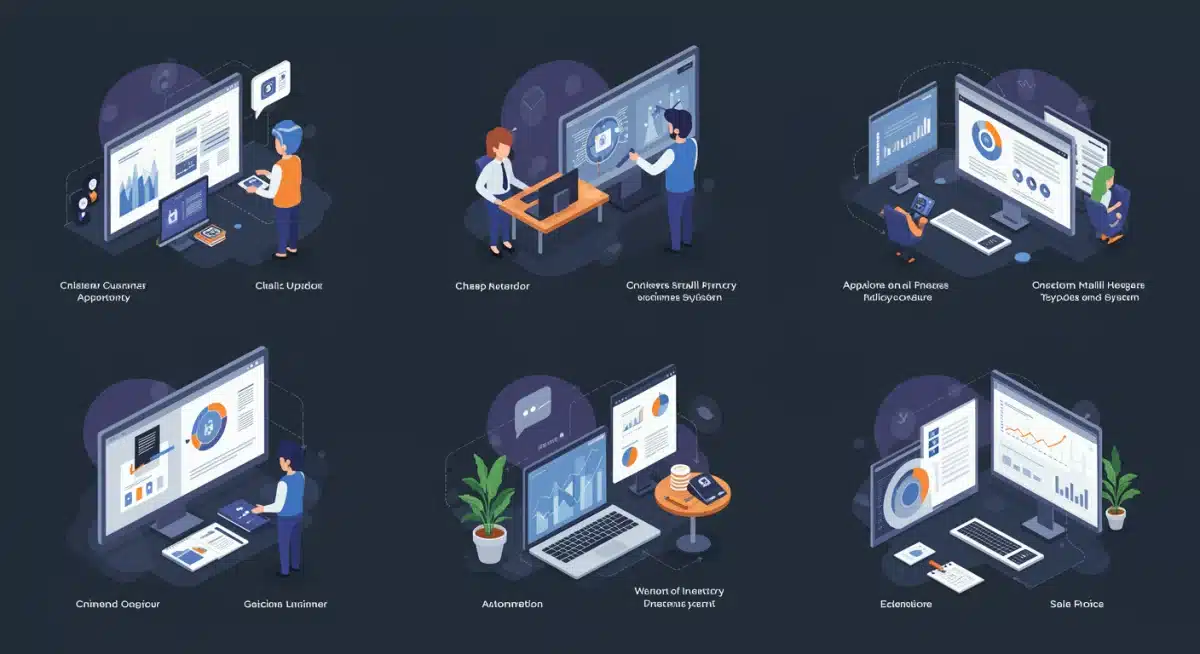
Key Areas of AI Impact on Small Business Productivity
The impact of AI on US small businesses is pervasive, touching almost every aspect of their operations. To fully appreciate the projected 5% productivity increase, it’s essential to break down the key areas where AI is making the most significant difference. These areas represent strategic opportunities for small business owners to implement AI and reap substantial benefits.
Customer Relationship Management (CRM) and Marketing
AI is revolutionizing how small businesses manage customer relationships and execute marketing strategies. CRM systems integrated with AI can analyze customer interactions, predict future behaviors, and automate personalized communications. This allows small businesses to deliver highly targeted marketing messages, improve lead generation, and nurture customer loyalty more effectively. For example, AI can segment customer bases with precision, identifying high-value customers or those at risk of churn, enabling proactive engagement. The result is higher conversion rates, increased customer lifetime value, and a more efficient allocation of marketing resources, directly boosting the productivity of sales and marketing teams.
Operational Efficiency and Automation
Perhaps the most immediate and tangible impact of AI on small business productivity comes from operational efficiency and automation. AI-powered tools can automate a wide array of tasks, from administrative duties to complex data processing. Robotic Process Automation (RPA) can handle repetitive digital tasks, such as invoice processing, data migration, and report generation, minimizing human error and significantly speeding up workflows. In manufacturing or logistics, AI-driven robots and smart systems can optimize production lines, manage inventory, and even handle quality control. This automation not only reduces labor costs but also frees employees to focus on strategic initiatives, creative problem-solving, and direct customer engagement, leading to a substantial increase in overall output per employee.
Financial Management and Accounting
For many small businesses, financial management and accounting can be a daunting, time-consuming task. AI is transforming this sector by automating expense tracking, invoice generation, reconciliation, and even fraud detection. AI-powered accounting software can categorize transactions, generate financial reports, and provide insights into cash flow and profitability in real-time. This reduces the time spent on manual bookkeeping, minimizes errors, and allows business owners to have a clearer, more immediate understanding of their financial health. Such insights enable better financial planning, budgeting, and investment decisions, contributing directly to the financial productivity and stability of the business.
Human Resources and Talent Management
AI is also making waves in human resources, particularly for small businesses that may not have dedicated HR departments. AI tools can streamline recruitment processes by sifting through resumes, identifying qualified candidates, and even conducting initial screenings. Beyond hiring, AI can assist with employee onboarding, performance tracking, and identifying training needs. This reduces the administrative burden on management, ensures a more efficient and unbiased hiring process, and helps in retaining top talent. By optimizing HR functions, small businesses can build stronger teams more efficiently, which directly impacts their collective productivity and innovation capacity.
Supply Chain Optimization and Inventory Management
For product-based small businesses, AI’s role in supply chain optimization and inventory management is critical. AI algorithms can analyze historical sales data, market trends, and external factors (like weather patterns or economic indicators) to accurately predict demand. This predictive capability allows businesses to optimize inventory levels, minimizing holding costs and reducing the risk of stockouts or overstocking. Furthermore, AI can optimize logistics, identifying the most efficient shipping routes and carriers, and even managing warehouse operations. The result is a leaner, more responsive supply chain, leading to significant cost savings and improved delivery times, all contributing to enhanced operational productivity.
Challenges and Considerations for AI Integration
While the benefits of AI for US small businesses are undeniable, the path to integration is not without its challenges. Addressing these considerations proactively is vital for successful AI adoption and for realizing the projected 5% productivity increase.
Cost of Implementation and ROI
One of the primary concerns for small businesses is the initial cost of AI implementation. While many cloud-based AI solutions offer subscription models that reduce upfront costs, investing in new software, hardware, and potentially specialized training can still be a significant expenditure. Small business owners need to carefully evaluate the potential return on investment (ROI) before committing to AI solutions. This involves a thorough analysis of how AI will reduce costs, increase revenue, or improve efficiency to justify the investment. Starting with smaller, targeted AI applications that offer quick wins can be a strategic approach to demonstrate value and build confidence for further investments.
Data Privacy and Security Concerns
AI systems are heavily reliant on data, and this brings forth significant concerns regarding data privacy and security. Small businesses handle sensitive customer information, financial data, and proprietary business intelligence. Integrating AI requires robust security measures to protect this data from breaches and misuse. Compliance with regulations like GDPR or CCPA, even if not directly applicable to all US businesses, sets a high standard for data protection. Small businesses must invest in secure AI platforms, implement strong data governance policies, and ensure their employees are trained in best practices for data handling. A data breach can have devastating financial and reputational consequences, especially for smaller entities.
Lack of Technical Expertise and Training
Many small business owners and their employees may lack the technical expertise required to implement, manage, and optimize AI solutions. The perceived complexity of AI can be a significant barrier to adoption. This challenge can be addressed through user-friendly AI tools with intuitive interfaces, but often, some level of training or external consulting is necessary. Investing in upskilling existing employees or hiring talent with AI proficiency can be crucial. Moreover, AI providers offering comprehensive support and training resources can significantly ease the integration process for small businesses.
Integration with Existing Systems
Small businesses often operate with a patchwork of existing software and systems that may not be easily compatible with new AI technologies. Integrating AI solutions into legacy systems can be complex, time-consuming, and costly. Compatibility issues can lead to data silos, operational disruptions, and a failure to fully leverage AI’s potential. Businesses need to consider AI solutions that offer robust APIs and integration capabilities, or they may need to update or replace older systems to ensure seamless data flow and functionality. A phased approach to integration, starting with non-critical systems, can help manage this complexity.
Ethical Considerations and Bias in AI
As AI becomes more sophisticated, ethical considerations and the potential for algorithmic bias become increasingly important. AI systems are trained on data, and if that data is biased, the AI’s decisions can perpetuate or even amplify those biases. For small businesses, this can lead to unfair treatment of customers, discriminatory hiring practices, or skewed marketing efforts, resulting in reputational damage and legal repercussions. Small business owners must be aware of these risks, choose AI solutions from reputable vendors that prioritize ethical AI development, and regularly audit their AI systems for fairness and transparency. Responsible AI deployment is not just an ethical imperative but also a business necessity.

Strategies for Small Businesses to Leverage AI for Growth
To effectively harness the economic impact of AI on US small businesses and achieve the projected 5% productivity increase, strategic planning and execution are paramount. Small businesses need a pragmatic approach to integrate AI without overwhelming their resources.
Start Small and Scale Up
Instead of attempting a complete overhaul of operations with AI, small businesses should identify specific pain points or areas where AI can offer immediate, measurable benefits. Begin with a pilot project, such as implementing a chatbot for customer service or using AI for basic data entry automation. This allows businesses to test the waters, understand the technology’s capabilities and limitations, and measure ROI on a smaller scale. Successful pilot projects build confidence, provide valuable learning experiences, and create a strong case for scaling up AI initiatives to other areas of the business. This iterative approach minimizes risk and maximizes the chances of successful adoption.
Focus on Clear Business Objectives
AI implementation should always be driven by clear business objectives. Before investing in any AI tool, small business owners should define what they aim to achieve: Is it to reduce customer service response times, improve marketing campaign effectiveness, optimize inventory, or enhance financial reporting? Having specific goals will help in selecting the right AI solutions and measuring their impact. Without clear objectives, AI integration can become a costly endeavor with little tangible return. Aligning AI strategies with core business goals ensures that technology serves the business, rather than the other way around.
Invest in Employee Training and Upskilling
The success of AI integration heavily depends on the workforce’s ability to adapt and utilize these new tools. Small businesses should invest in training programs to upskill their employees, teaching them how to interact with AI systems, interpret AI-generated insights, and leverage AI for their daily tasks. This not only reduces resistance to new technology but also empowers employees to become more productive and valuable assets. Furthermore, fostering a culture of continuous learning around AI will ensure that the business remains agile and capable of adopting future technological advancements.
Leverage Cloud-Based AI Solutions
Cloud-based AI solutions are particularly beneficial for small businesses due to their accessibility, scalability, and reduced infrastructure requirements. These Software-as-a-Service (SaaS) AI platforms eliminate the need for significant upfront hardware investments and complex IT infrastructure management. They often come with user-friendly interfaces and offer flexible subscription models, making advanced AI capabilities affordable and manageable for small businesses. Leveraging such solutions allows small businesses to quickly deploy AI, scale up or down as needed, and benefit from continuous updates and improvements from the service provider.
Seek Expert Guidance and Partnerships
For small businesses lacking in-house AI expertise, seeking external guidance can be invaluable. Consulting with AI specialists, technology advisors, or partnering with AI solution providers can provide the necessary knowledge and support for successful implementation. These experts can help identify the most suitable AI applications, assist with integration, and provide ongoing support. Government programs, industry associations, and academic institutions sometimes offer resources or grants to help small businesses adopt new technologies, which should also be explored.
Prioritize Data Quality and Governance
The effectiveness of any AI system is directly proportional to the quality of the data it processes. Small businesses must prioritize data quality and establish robust data governance practices. This includes ensuring data accuracy, consistency, completeness, and security. Clean, well-organized data is essential for AI algorithms to generate accurate insights and make reliable predictions. Investing time and resources in data management foundational steps will yield significant returns on AI investments, preventing the ‘garbage in, garbage out’ scenario.
The Future Outlook: Beyond 2026
The projected 5% productivity increase by the end of 2026 is merely a stepping stone in the larger narrative of AI’s economic impact on US small businesses. Looking beyond this immediate horizon, the future outlook is even more transformative. AI is not a static technology; it is continuously evolving, with advancements in machine learning, natural language processing, and computer vision opening up new possibilities at an unprecedented pace.
By 2030, we can anticipate an even deeper integration of AI into every facet of small business operations. AI will move beyond task automation to more complex cognitive tasks, such as strategic planning, predictive maintenance, and highly personalized customer experiences that feel almost intuitive. The emergence of ‘AI as a Service’ (AIaaS) will make sophisticated AI models accessible to even the smallest micro-businesses, further democratizing access to advanced technology. This widespread adoption will not only drive productivity gains but also foster innovation, enabling small businesses to compete globally and create niche markets previously unattainable.
Furthermore, AI will play a crucial role in enhancing the resilience of small businesses against economic shocks and market volatility. By providing real-time market intelligence, risk assessment, and adaptive operational models, AI can help small businesses navigate uncertainties with greater agility. The ability to quickly pivot, optimize resources, and identify new opportunities will be a significant advantage in an increasingly dynamic global economy.
However, this future also brings new challenges. The demand for AI-literate talent will intensify, requiring continuous investment in education and workforce development. Ethical considerations surrounding AI, such as algorithmic fairness, transparency, and accountability, will become even more critical, necessitating robust regulatory frameworks and industry best practices. Small businesses that prioritize responsible AI deployment and maintain a human-centric approach will be best positioned for long-term success.
Ultimately, the long-term economic impact of AI on US small businesses will be characterized by sustained growth, enhanced competitiveness, and a fundamental reshaping of traditional business models. The 5% productivity increase by 2026 is just the beginning of a profound transformation that will empower small businesses to thrive in the digital age, contributing significantly to the overall strength and innovation of the US economy.
Conclusion
The advent of artificial intelligence marks a pivotal moment for US small businesses. The projected 5% productivity increase by the end of 2026 is a testament to AI’s transformative power, offering unprecedented opportunities for efficiency, growth, and innovation. From automating routine tasks and enhancing data-driven decision-making to revolutionizing customer engagement and optimizing supply chains, AI is fundamentally reshaping how small businesses operate and compete.
While challenges such as implementation costs, data security, and the need for technical expertise remain, these are surmountable with strategic planning and a proactive approach. By starting small, focusing on clear business objectives, investing in employee training, leveraging cloud-based solutions, and seeking expert guidance, small businesses can effectively integrate AI into their operations. Prioritizing data quality and addressing ethical considerations will further ensure the responsible and beneficial deployment of AI.
The economic impact of AI on US small businesses is not just about incremental improvements; it’s about unlocking new potentials and fostering a resilient, innovative, and highly competitive small business sector. As AI continues to evolve, its role will only become more central, driving sustained growth and ensuring that small businesses remain the dynamic engine of the American economy well into the future. Embracing AI today is not just an option; it is an essential strategy for survival and prosperity in the coming years.