AI for Supply Chain: Cutting U.S. Business Costs by 10% in 2026
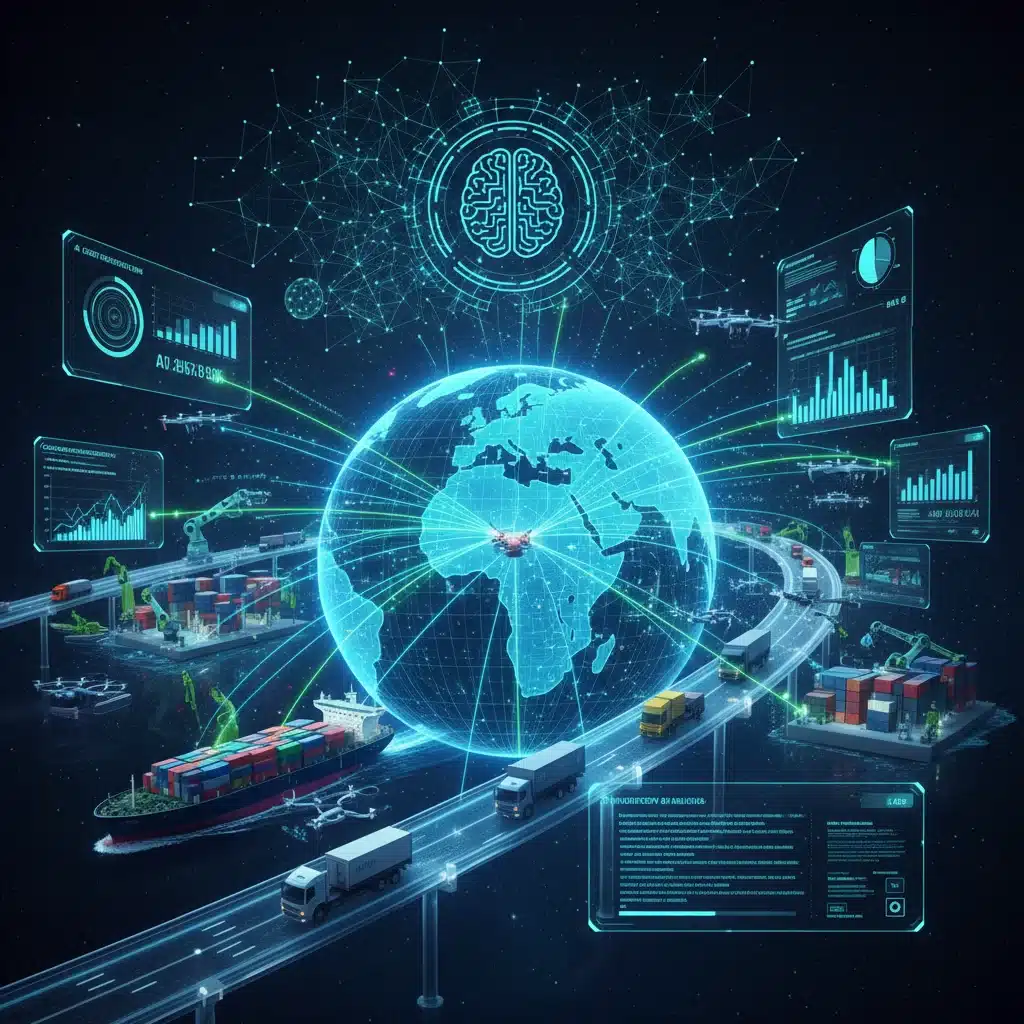
In an increasingly complex and interconnected global economy, the efficiency of a supply chain can make or break a business. For U.S. businesses, navigating geopolitical shifts, fluctuating consumer demands, and rising operational expenses has become a formidable challenge. However, a powerful ally has emerged from the realm of technology: Artificial Intelligence (AI). The integration of AI into supply chain management is not just a futuristic concept; it’s a present-day reality rapidly transforming how goods are moved, stored, and delivered. This comprehensive article delves into the latest advancements in AI for supply chain optimization, focusing on its profound impact on reducing operational costs for U.S. businesses, with a bold projection of a 10% reduction by 2026.
The promise of AI in the supply chain lies in its unparalleled ability to process vast amounts of data, identify intricate patterns, predict future outcomes with remarkable accuracy, and automate complex decision-making processes. From demand forecasting and inventory management to logistics optimization and risk mitigation, AI is proving to be a game-changer. As we explore the multifaceted applications and benefits, it becomes clear that investing in AI supply chain optimization is no longer an option but a strategic imperative for businesses aiming to stay competitive and profitable in the coming years.
The Current Landscape: Challenges Facing U.S. Supply Chains
Before diving into the solutions AI offers, it’s crucial to understand the persistent challenges plaguing U.S. supply chains. These include:
- Volatility in Demand: Consumer preferences can shift rapidly, leading to either stockouts or overstocking, both of which incur significant costs.
- Geopolitical Instability: Global events, trade disputes, and natural disasters can disrupt supply routes and material availability.
- Rising Transportation Costs: Fuel price fluctuations, labor shortages, and infrastructure limitations contribute to escalating logistics expenses.
- Lack of Visibility: Many businesses struggle with a clear, real-time view of their entire supply chain, making it difficult to react quickly to issues.
- Inefficient Inventory Management: Holding too much inventory ties up capital, while too little can lead to lost sales and customer dissatisfaction.
- Sustainability Pressures: Increasing regulatory and consumer demand for environmentally friendly practices adds another layer of complexity.
- Labor Shortages: A critical lack of skilled labor in warehousing, trucking, and other logistical functions impacts efficiency and increases costs.
These challenges collectively contribute to higher operational costs, reduced profitability, and diminished customer satisfaction. Traditional, manual approaches to supply chain management are simply no longer sufficient to address these modern complexities. This is where AI supply chain optimization steps in, offering a pathway to unprecedented levels of efficiency and resilience.
AI’s Transformative Role in Supply Chain Optimization
AI’s capabilities extend across every facet of the supply chain, offering intelligent solutions to previously intractable problems. By leveraging machine learning, deep learning, natural language processing, and computer vision, AI can elevate supply chain operations from reactive to proactive, and from inefficient to highly optimized.
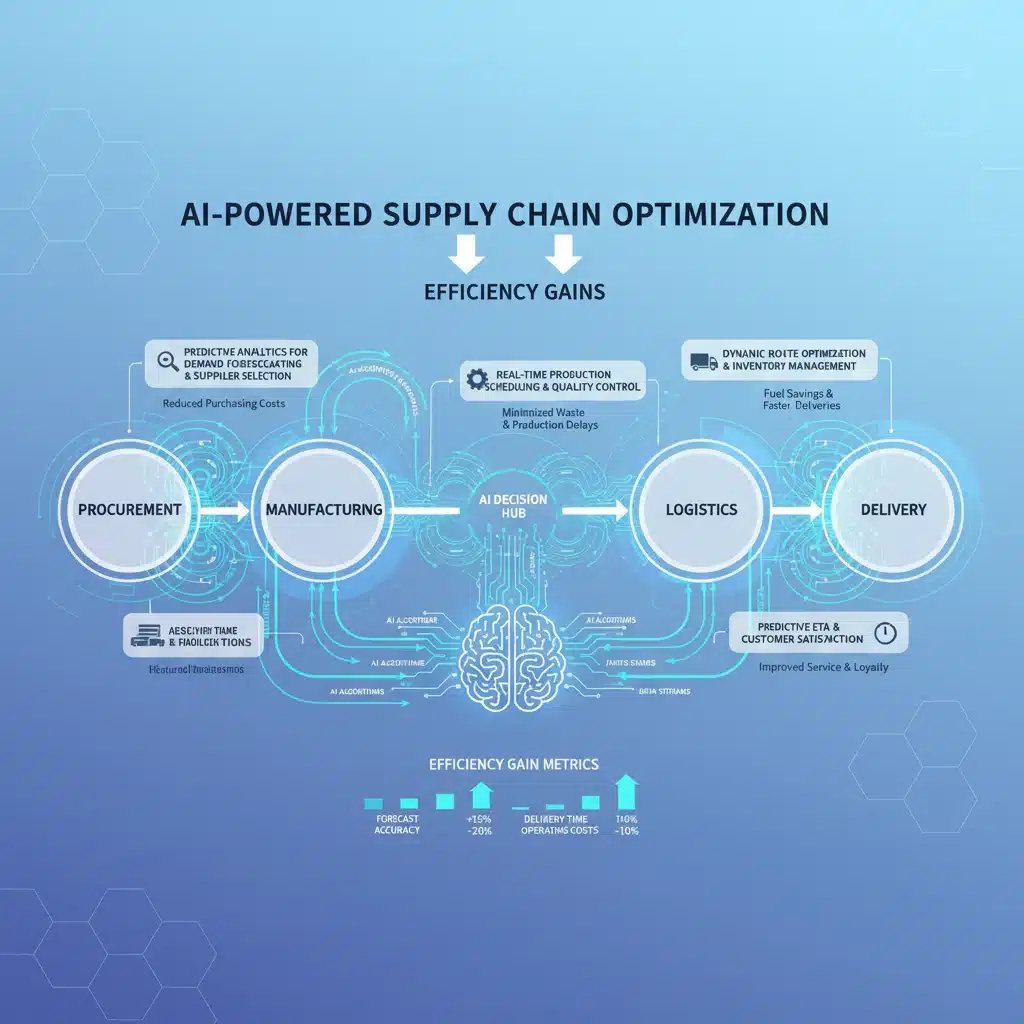
Predictive Analytics for Demand Forecasting
One of the most significant contributions of AI to supply chain optimization is its ability to revolutionize demand forecasting. Traditional forecasting methods often rely on historical data and statistical models, which can fall short in dynamic markets. AI, particularly machine learning algorithms, can analyze vast datasets, including:
- Historical sales data
- Economic indicators
- Social media trends
- Weather patterns
- Competitor activities
- Promotional campaigns
By identifying complex, non-linear relationships within this data, AI can generate highly accurate demand forecasts. This precision allows businesses to:
- Minimize Overstocking: Reduce inventory holding costs, obsolescence, and waste.
- Prevent Stockouts: Ensure products are available when customers want them, avoiding lost sales and improving customer satisfaction.
- Optimize Production Schedules: Align manufacturing with anticipated demand, leading to more efficient resource utilization.
The financial impact of improved demand forecasting is substantial. A reduction in inventory carrying costs alone can translate into significant savings, directly contributing to the projected 10% operational cost reduction for U.S. businesses by 2026 through advanced AI supply chain optimization.
Intelligent Inventory Management
Beyond forecasting, AI enhances inventory management by optimizing stock levels across multiple locations. AI-powered systems can:
- Dynamic Stock Replenishment: Automatically trigger orders when stock levels hit optimal reorder points, considering lead times and demand variability.
- Warehouse Optimization: Guide efficient placement of goods within warehouses, minimizing retrieval times and maximizing space utilization.
- Multi-Echelon Inventory Optimization (MEIO): Coordinate inventory decisions across the entire supply network, from raw materials to finished goods, ensuring the right product is in the right place at the right time.
- Returns Management: Efficiently process returns, identifying patterns to reduce future returns and optimize the reintroduction of returned items into inventory.
These capabilities lead to a leaner, more responsive inventory system, freeing up capital and reducing the costs associated with storage, spoilage, and obsolescence. This is a core component of effective AI supply chain optimization.
Optimizing Logistics and Transportation
Logistics and transportation often represent a significant portion of operational costs. AI offers revolutionary solutions for optimizing these functions:
- Route Optimization: AI algorithms can analyze real-time traffic data, weather conditions, delivery schedules, and vehicle capacities to determine the most efficient routes, reducing fuel consumption and delivery times.
- Fleet Management: Predictive maintenance for vehicles, optimized loading strategies, and intelligent dispatching systems ensure fleets operate at peak efficiency.
- Last-Mile Delivery: AI can optimize complex last-mile routes, considering factors like customer availability, delivery windows, and even drone delivery possibilities, significantly lowering costs and improving customer experience.
- Freight Procurement: AI can analyze market rates, carrier performance, and historical data to negotiate better freight contracts and identify cost-effective shipping options.
The ability to dynamically adjust to changing conditions and make real-time decisions is a hallmark of AI in logistics, driving down transportation costs and improving delivery reliability, key benefits of AI supply chain optimization.
Enhanced Supplier Relationship Management and Procurement
AI extends its influence to the very beginning of the supply chain: procurement and supplier management. By analyzing supplier performance data, market trends, and risk factors, AI can:
- Supplier Selection: Identify the most reliable and cost-effective suppliers based on a multitude of criteria.
- Contract Negotiation: Provide insights for better negotiation strategies by analyzing historical contract data and market benchmarks.
- Risk Assessment: Proactively identify potential supply chain disruptions from specific suppliers, allowing businesses to diversify or mitigate risks before they materialize.
- Spend Analytics: Analyze purchasing patterns to identify opportunities for consolidation, bulk discounts, and overall cost reduction.
These capabilities lead to stronger, more resilient supplier relationships and significant savings in procurement, directly contributing to the overall goal of AI supply chain optimization.
Risk Management and Resilience
The COVID-19 pandemic starkly highlighted the vulnerabilities of global supply chains. AI offers powerful tools for building resilience and mitigating risks:
- Predictive Risk Identification: AI can monitor global news, weather patterns, economic indicators, and social media for early warning signs of potential disruptions (e.g., natural disasters, geopolitical tensions, factory closures).
- Scenario Planning: AI simulations can model the impact of various disruptions and help businesses develop contingency plans.
- Real-Time Anomaly Detection: AI systems can detect unusual patterns in production, logistics, or demand that might indicate an emerging problem, allowing for rapid intervention.
- Supply Chain Mapping: AI can help visualize and understand the entire supply chain network, including sub-tier suppliers, to identify single points of failure.
By proactively identifying and addressing risks, businesses can avoid costly disruptions, maintain continuity of operations, and protect their bottom line, reinforcing the value of AI supply chain optimization.
Financial Impact: The 10% Cost Reduction by 2026
The projection of a 10% reduction in operational costs for U.S. businesses by 2026 through AI supply chain optimization is not an arbitrary figure. It’s an achievable goal driven by the cumulative effect of AI’s various applications:
- Reduced Inventory Costs: More accurate forecasting and intelligent inventory management can cut carrying costs by 5-15%.
- Lower Transportation Expenses: Optimized routing, fleet management, and freight procurement can lead to 10-20% savings in logistics.
- Improved Labor Efficiency: Automation of routine tasks, optimized workflows, and better resource allocation can reduce labor costs by 5-10%.
- Minimized Waste and Obsolescence: Better demand matching and inventory rotation drastically cut down on waste.
- Enhanced Supplier Performance: Strategic sourcing and risk mitigation lead to better pricing and fewer costly disruptions.
- Increased Revenue from Improved Customer Satisfaction: Fewer stockouts and faster, more reliable deliveries lead to repeat business and stronger brand loyalty.
When these individual savings are aggregated across a typical U.S. business’s operational budget, a 10% overall reduction becomes a realistic and compelling target. Early adopters of AI supply chain optimization are already reporting significant gains, setting a precedent for wider industry adoption.
Implementing AI in Your Supply Chain: Key Considerations
While the benefits are clear, successful AI implementation requires careful planning and execution. Here are key considerations for U.S. businesses:
Data Quality and Availability
AI models are only as good as the data they’re trained on. Businesses must prioritize:
- Data Collection: Establish robust systems for collecting comprehensive and relevant data across all supply chain touchpoints.
- Data Cleansing: Ensure data is accurate, consistent, and free from errors.
- Data Integration: Consolidate data from disparate systems (ERPs, WMS, TMS, CRMs) into a unified platform for AI analysis.
Poor data quality is the most common reason for AI project failure. Investing in data governance and infrastructure is paramount for effective AI supply chain optimization.
Talent and Skills Gap
Implementing and managing AI solutions requires specialized skills in data science, machine learning engineering, and AI ethics. Businesses may need to:
- Hire New Talent: Recruit data scientists, AI engineers, and AI-savvy supply chain professionals.
- Upskill Existing Workforce: Provide training programs for current employees to understand and interact with AI systems.
- Partner with Experts: Collaborate with AI solution providers or consultants to bridge internal skill gaps.
Scalability and Integration
AI solutions should be designed to scale with business growth and integrate seamlessly with existing IT infrastructure. Cloud-based AI platforms often offer greater flexibility and scalability. Careful planning is needed to avoid creating new data silos or operational complexities, ensuring smooth AI supply chain optimization.
Change Management
Introducing AI often means significant changes to workflows, roles, and decision-making processes. Effective change management strategies are crucial to ensure employee adoption and mitigate resistance. Transparent communication, training, and demonstrating the benefits of AI are key.
Start Small, Scale Big
Rather than attempting a massive, company-wide AI overhaul, businesses should consider starting with pilot projects in specific areas (e.g., demand forecasting for a single product line or route optimization for a particular region). This allows for learning, refinement, and demonstrating ROI before scaling up, a pragmatic approach to AI supply chain optimization.

Case Studies and Success Stories
Numerous U.S. businesses are already reaping the rewards of AI supply chain optimization:
- Retail Giants: Companies like Walmart and Amazon utilize AI for hyper-accurate demand forecasting, personalized recommendations, and dynamic routing for last-mile delivery, leading to billions in savings and enhanced customer experience.
- Manufacturing Sector: General Electric employs AI for predictive maintenance of its industrial assets, optimizing production schedules and reducing unplanned downtime in its complex manufacturing supply chains.
- Logistics Providers: UPS and FedEx leverage AI for real-time route optimization, package sorting, and fleet management, significantly cutting fuel costs and improving delivery efficiency.
- Food and Beverage Industry: Companies are using AI to predict spoilage, optimize cold chain logistics, and manage inventory of perishable goods, reducing waste and ensuring product freshness.
These examples underscore the tangible benefits and the widespread applicability of AI across diverse industries, all pointing towards the achievable goal of significant cost reduction through AI supply chain optimization.
The Future of AI in U.S. Supply Chains
The evolution of AI in supply chains is far from over. Future trends include:
- Autonomous Supply Chains: The vision of fully autonomous supply chains, where AI systems manage most decisions from procurement to delivery with minimal human intervention, is becoming more feasible.
- Explainable AI (XAI): As AI becomes more pervasive, the need for transparency and understanding how AI makes decisions will increase, leading to more explainable AI models.
- AI-Powered Digital Twins: Creating virtual replicas of physical supply chains, allowing businesses to simulate scenarios, test strategies, and predict outcomes without real-world disruption.
- Enhanced Human-AI Collaboration: AI will augment human capabilities, allowing supply chain professionals to focus on strategic initiatives rather than routine tasks.
- Blockchain Integration: Combining AI with blockchain technology for enhanced traceability, transparency, and security across the supply chain.
These advancements promise even greater efficiencies and cost savings, solidifying AI’s role as the backbone of modern supply chain management and accelerating the realization of the 10% operational cost reduction target for U.S. businesses by 2026.
Conclusion: Embracing AI for a Competitive Edge
The journey towards achieving a 10% reduction in operational costs for U.S. businesses by 2026 through AI supply chain optimization is not without its complexities, but the rewards are profound. From revolutionizing demand forecasting and inventory management to optimizing logistics and mitigating risks, AI offers an unparalleled suite of tools to transform supply chain operations.
Businesses that embrace AI now, investing in the right technologies, talent, and data infrastructure, will be best positioned to navigate future uncertainties, enhance their competitiveness, and unlock significant financial benefits. The time to act is now. By strategically integrating AI into their supply chain strategies, U.S. businesses can not only achieve the ambitious goal of a 10% operational cost reduction but also build more resilient, efficient, and customer-centric supply chains for the future.