6-Month Roadmap: Integrating AI into US Telemedicine for Better Patient Outcomes

Maximizing Patient Outcomes: A 6-Month Roadmap for Integrating AI into U.S. Telemedicine Services (PRACTICAL SOLUTIONS)
The landscape of healthcare is in constant evolution, driven by technological advancements and an ever-increasing demand for accessible, efficient, and personalized care. In the United States, telemedicine has emerged as a cornerstone of modern healthcare delivery, particularly accelerated by recent global events. As we look to the future, Artificial Intelligence (AI) stands poised to revolutionize telemedicine, offering unprecedented opportunities to enhance diagnostic accuracy, streamline operations, and ultimately, maximize patient outcomes. However, the successful integration of AI into existing telemedicine frameworks is not a simple undertaking. It requires a strategic, phased approach, careful planning, and a deep understanding of both the technological capabilities and the ethical implications.
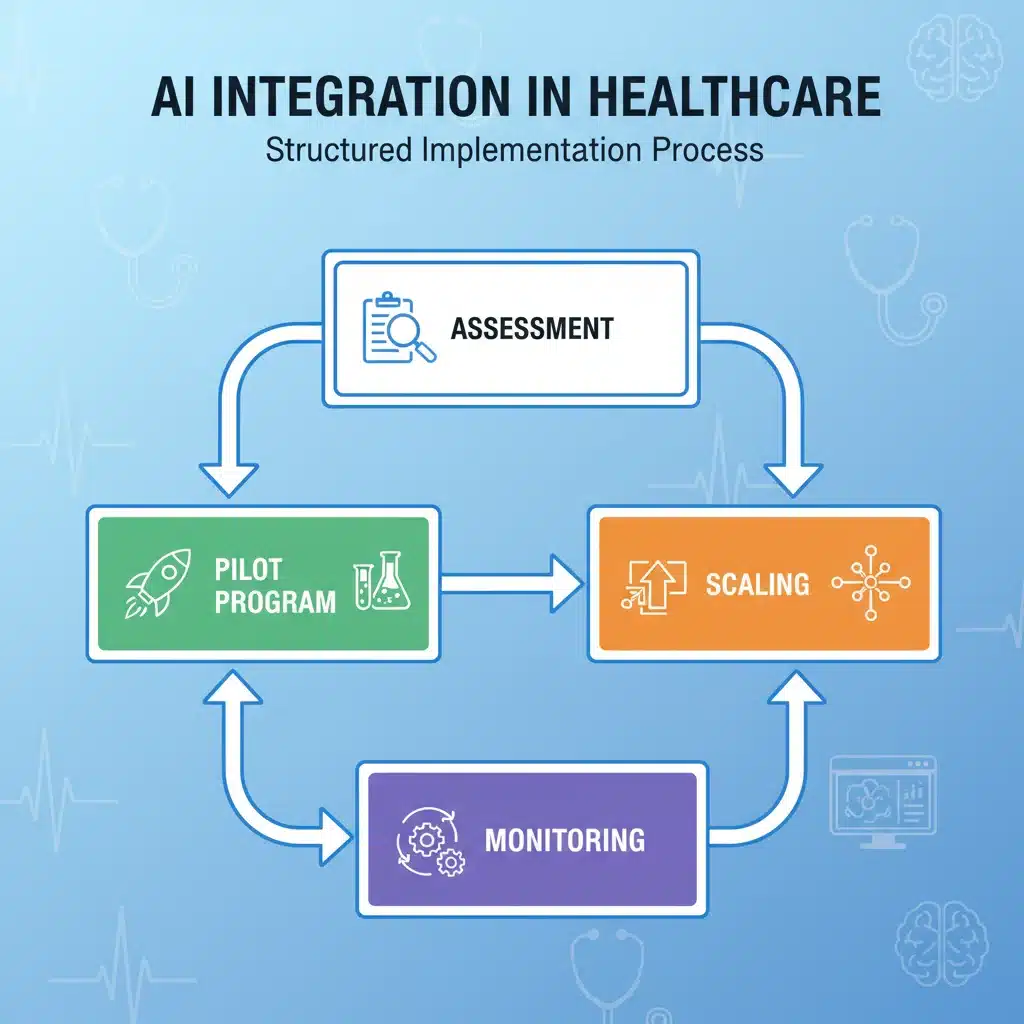
This article presents a comprehensive AI Telemedicine Integration roadmap, detailing a practical 6-month plan for U.S. healthcare providers and organizations looking to harness the power of AI in their telemedicine services. We will delve into specific actions, considerations, and best practices for each month, ensuring a smooth transition and sustainable impact. The goal is to provide actionable insights that lead to tangible improvements in patient care, operational efficiency, and clinical decision-making.
The Imperative of AI in Modern Telemedicine
Before we outline the roadmap, it’s crucial to understand why AI Telemedicine Integration is not just an option, but a necessity. Telemedicine, while offering convenience and accessibility, often faces challenges such as diagnostic limitations, data overload for clinicians, and the need for more personalized patient engagement. AI addresses these gaps by:
- Enhancing Diagnostic Accuracy: AI algorithms can analyze vast amounts of medical data, including imaging, lab results, and patient history, to identify patterns and flag potential issues that might be missed by human observation alone.
- Personalizing Treatment Plans: By leveraging predictive analytics, AI can help tailor treatment plans to individual patient needs, considering their genetic predispositions, lifestyle, and response to previous therapies.
- Automating Administrative Tasks: AI-powered tools can significantly reduce the administrative burden on healthcare professionals, automating scheduling, billing, and documentation, freeing up time for direct patient care.
- Improving Patient Engagement and Monitoring: AI can facilitate proactive patient monitoring through wearable devices and intelligent chatbots, providing timely interventions and personalized health advice.
- Optimizing Resource Allocation: AI can predict demand for services, helping healthcare systems allocate resources more efficiently and reduce wait times.
The potential for AI to transform telemedicine is immense, paving the way for a more proactive, predictive, personalized, and participatory healthcare model. This roadmap will guide you through the practical steps to realize this potential.
Month 1: Foundation and Strategic Planning for AI Telemedicine Integration
The first month is critical for laying a solid foundation. This involves thorough assessment, goal setting, and team formation. Without a clear strategy, even the most advanced AI tools can fail to deliver their promised value.
Key Activities:
- Form an AI Integration Task Force (Week 1): Assemble a multidisciplinary team comprising clinical leaders, IT specialists, data scientists, legal experts (for compliance), and patient advocates. This team will spearhead the AI Telemedicine Integration initiative.
- Conduct a Comprehensive Needs Assessment (Weeks 1-2): Identify specific pain points and areas within your telemedicine services where AI can offer the most significant impact. This might include improving diagnostic triage, automating patient intake, or enhancing chronic disease management. Engage with clinicians, patients, and administrative staff to gather diverse perspectives.
- Define Clear Objectives and KPIs (Week 2): Establish measurable goals for your AI integration. Examples include: reducing diagnostic errors by X%, decreasing physician burnout by Y%, improving patient satisfaction scores by Z%, or cutting administrative costs by W%. These KPIs will be crucial for tracking progress and demonstrating ROI.
- Research and Identify Potential AI Solutions (Weeks 2-3): Explore the market for existing AI tools and platforms relevant to your identified needs. Focus on solutions with proven track records, robust security features, and compliance with healthcare regulations (e.g., HIPAA). Consider AI for natural language processing (NLP) for patient notes, computer vision for diagnostic imaging, or machine learning for predictive analytics.
- Assess Current IT Infrastructure and Data Readiness (Weeks 3-4): Evaluate your existing telemedicine platform, electronic health records (EHR) system, and network capabilities. Determine if your infrastructure can support AI tools, which often require significant computational power and secure data storage. Identify any gaps in data quality, standardization, or accessibility that need to be addressed.
- Develop a High-Level Budget and Resource Plan (Week 4): Estimate the financial investment required for AI tools, infrastructure upgrades, training, and ongoing maintenance. Allocate human resources for implementation and management.
Expected Outcomes for Month 1:
- A dedicated AI integration task force.
- Clearly defined problem statements and strategic objectives for AI implementation.
- A preliminary list of potential AI vendors and solutions.
- An assessment of current IT infrastructure and data readiness.
- A high-level budget and resource allocation plan.
Month 2: Vendor Selection, Pilot Planning, and Regulatory Compliance
Month two shifts focus to selecting the right AI partners and meticulously planning the initial pilot program, alongside ensuring all regulatory and ethical considerations are addressed.
Key Activities:
- Deep Dive into Vendor Evaluation (Weeks 5-6): Shortlist AI vendors based on your research from Month 1. Conduct detailed demonstrations, request case studies, and scrutinize their data security protocols, interoperability with your existing systems, and customer support. Prioritize vendors with strong healthcare-specific experience and a clear understanding of U.S. regulatory requirements.
- Draft a Detailed Pilot Program Plan (Weeks 5-7): Select a specific, manageable use case for your initial AI pilot. This could be AI-powered symptom checking for common conditions, automated transcription of virtual visits, or predictive analytics for patient no-shows. Define the scope, duration, success metrics, and a small, controlled group of users (clinicians and patients) for the pilot.
- Address Data Governance and Security (Weeks 6-7): Work with legal and IT teams to establish robust data governance policies. This includes data anonymization/de-identification, access controls, and audit trails. Ensure full compliance with HIPAA and other relevant U.S. data privacy laws. This is a non-negotiable aspect of any AI Telemedicine Integration.
- Develop an Ethical Framework for AI Use (Week 7): Establish guidelines for ethical AI deployment, focusing on fairness, transparency, accountability, and patient autonomy. Consider potential biases in AI algorithms and plan for mitigation strategies.
- Initiate Stakeholder Communication and Training Needs Assessment (Week 8): Begin communicating the upcoming changes to relevant stakeholders, including clinical staff, administrative personnel, and patients. Identify specific training needs for different user groups to ensure effective adoption of the new AI tools.
Expected Outcomes for Month 2:
- Selection of preferred AI vendor(s) or solution(s).
- A comprehensive pilot program plan, including scope, metrics, and user groups.
- Established data governance and security protocols.
- A preliminary ethical framework for AI use.
- Initial communication and training needs identified.
Month 3: Implementation and Initial Training for AI Telemedicine Integration
With planning complete, Month 3 focuses on the technical implementation of the chosen AI solution and the commencement of user training.
Key Activities:
- Technical Integration and Configuration (Weeks 9-10): Work closely with your chosen AI vendor and internal IT team to integrate the AI solution with your existing telemedicine platform and EHR. This involves API integrations, data mapping, and configuring the AI to meet your specific operational workflows. Rigorous testing of data flow and system interoperability is crucial.
- Develop Comprehensive Training Materials (Weeks 9-11): Create user-friendly training manuals, video tutorials, and FAQs for both clinicians and administrative staff involved in the pilot. Emphasize practical application and highlight how AI will augment their existing roles.
- Conduct Pilot User Training (Weeks 11-12): Provide hands-on training sessions for the selected pilot group. Focus on the benefits of the AI tool, how to use it effectively, and how to interpret its outputs. Address any concerns and gather initial feedback.
- Set Up Monitoring and Feedback Mechanisms (Week 12): Establish systems for continuously monitoring the AI’s performance during the pilot. This includes tracking the defined KPIs, collecting user feedback (surveys, direct interviews), and logging any technical issues or unexpected outcomes.
Expected Outcomes for Month 3:
- Successful technical integration of the AI solution.
- Comprehensive training materials for pilot users.
- Trained pilot group ready to use the AI tool.
- Operational monitoring and feedback mechanisms in place.
Month 4: Pilot Program Execution and Iteration
Month 4 is dedicated to running the pilot program, gathering data, and making necessary adjustments based on real-world usage. This iterative process is vital for optimizing the AI Telemedicine Integration.
Key Activities:
- Execute the Pilot Program (Weeks 13-16): Launch the AI solution with the pilot group. Closely monitor its performance against the established KPIs. Observe user interaction and identify any workflow bottlenecks or usability issues.
- Collect and Analyze Performance Data (Weeks 13-16): Regularly collect data on the AI’s accuracy, efficiency, and impact on patient outcomes. Analyze user feedback from surveys and direct interactions. Look for both quantitative and qualitative insights.
- Regular Review Meetings with Task Force (Bi-weekly): Hold frequent meetings with the AI integration task force to review pilot progress, discuss challenges, and brainstorm solutions.
- Iterate and Refine the AI Solution (Weeks 14-16): Based on the collected data and feedback, work with the AI vendor and your IT team to make necessary adjustments. This could involve fine-tuning algorithms, improving user interface, or modifying workflows.
- Address Ethical Concerns Proactively (Ongoing): Continuously review the ethical implications of the AI’s performance. For example, if the AI shows bias in certain patient demographics, address it immediately through data adjustment or algorithm refinement.
Expected Outcomes for Month 4:
- Successful execution of the pilot program.
- Comprehensive data on AI performance and user feedback.
- Identified areas for improvement and initial refinements to the AI solution.
- Proactive addressing of ethical concerns.
Month 5: Scaling Preparation and Advanced Training
Having successfully completed the pilot, Month 5 focuses on preparing for a broader rollout and expanding training efforts.
Key Activities:
- Evaluate Pilot Success and ROI (Week 17): Conduct a thorough evaluation of the pilot program against the initial KPIs. Quantify the return on investment (ROI) by comparing improvements in efficiency, patient satisfaction, and cost savings against the investment. This data will be crucial for securing broader organizational buy-in.
- Develop a Phased Rollout Plan (Weeks 17-18): Based on pilot success, create a detailed plan for scaling the AI Telemedicine Integration across your organization. This plan should outline the sequence of departments or regions, timelines, and resource allocation for each phase.
- Expand Training Programs and Materials (Weeks 18-19): Develop more extensive training programs for a larger user base. Consider different formats, such as online modules, workshops, and one-on-one coaching. Ensure training addresses diverse user needs and roles.
- Refine Policies and Procedures (Week 19): Update internal policies and procedures to incorporate the new AI-driven workflows. This includes guidelines for AI use, data handling, and troubleshooting.
- Plan for Ongoing Support and Maintenance (Week 20): Establish a robust support system for users, including a dedicated help desk, technical support, and channels for ongoing feedback. Plan for regular AI model updates and system maintenance.
Expected Outcomes for Month 5:
- Comprehensive pilot evaluation report, including ROI.
- A detailed phased rollout plan.
- Expanded training programs and refined materials.
- Updated internal policies and procedures.
- A plan for ongoing support and maintenance.
Month 6: Full-Scale Rollout and Continuous Optimization
The final month of the roadmap sees the full-scale deployment of the AI solution, coupled with a commitment to continuous monitoring and improvement.
Key Activities:
- Execute Full-Scale Rollout (Weeks 21-24): Begin the phased rollout of the AI solution to the wider organization as per the plan developed in Month 5. Provide continuous support and address any initial challenges promptly.
- Ongoing User Training and Education (Weeks 21-24): Continue to offer training and educational resources as new users come online. Foster a culture of continuous learning and adaptation.
- Establish a Continuous Monitoring and Optimization Loop (Ongoing): Implement a permanent system for monitoring AI performance, collecting user feedback, and analyzing its impact on patient outcomes. Regularly review KPIs and make data-driven adjustments to the AI models and workflows. This is crucial for long-term success of AI Telemedicine Integration.
- Regular Performance Reviews and Reporting (Monthly/Quarterly): Conduct regular performance reviews of the AI system and report on its impact to senior leadership. Highlight successes, identify areas for further improvement, and communicate the value proposition.
- Explore New AI Applications (Ongoing): As your organization gains experience with AI, begin to explore new and innovative applications of AI within telemedicine, building on your initial successes. This could include integrating more advanced diagnostic AI, virtual health assistants, or personalized wellness programs.
- Stay Abreast of Regulatory Changes (Ongoing): The regulatory landscape for AI in healthcare is constantly evolving. Ensure your organization remains compliant with new guidelines and adapts its AI strategies accordingly.

Expected Outcomes for Month 6:
- Successful phased rollout of the AI solution across the organization.
- Established continuous monitoring and optimization processes.
- Regular reporting on AI performance and impact.
- A framework for exploring future AI applications.
Challenges and Mitigation Strategies for AI Telemedicine Integration
While the benefits of AI Telemedicine Integration are clear, organizations must be prepared for potential challenges:
- Data Quality and Availability: AI models are only as good as the data they are trained on. Ensure data is clean, standardized, and representative. Mitigation: Invest in data cleansing, standardization tools, and robust data governance.
- Interoperability Issues: Integrating new AI tools with legacy EHR systems can be complex. Mitigation: Prioritize AI solutions with open APIs and strong interoperability features. Plan for phased integration and thorough testing.
- Clinician Resistance: Fear of job displacement or skepticism about AI’s capabilities can lead to resistance. Mitigation: Involve clinicians from the outset, emphasize AI as an augmentation tool, provide comprehensive training, and highlight success stories.
- Patient Trust and Acceptance: Patients may be hesitant to interact with AI-powered systems. Mitigation: Ensure transparency about AI use, educate patients on its benefits, and maintain human oversight.
- Ethical and Bias Concerns: AI algorithms can perpetuate or even amplify existing biases if not carefully designed and monitored. Mitigation: Implement robust ethical frameworks, conduct regular bias audits, and ensure diverse datasets for training.
- Regulatory Compliance: Navigating the complex regulatory landscape for AI in healthcare (e.g., FDA clearance for medical devices, HIPAA compliance) requires constant vigilance. Mitigation: Engage legal and compliance experts from the beginning and stay updated on regulatory changes.
- Cost and ROI Justification: The initial investment in AI can be substantial. Mitigation: Clearly define KPIs, track ROI diligently, and communicate the long-term cost savings and patient outcome improvements.
The Future of AI in U.S. Telemedicine
This 6-month roadmap is just the beginning. The integration of AI into U.S. telemedicine is an ongoing journey of innovation and refinement. As AI technologies mature, we can expect even more sophisticated applications, such as:
- Advanced Predictive Analytics: AI will move beyond identifying risks to proactively predicting health crises and recommending preventive interventions.
- Hyper-Personalized Medicine: AI will enable highly individualized treatment plans based on real-time physiological data, genomic information, and environmental factors.
- Virtual Health Assistants: More advanced AI-powered virtual assistants will provide comprehensive support, from answering complex medical questions to managing chronic conditions.
- Remote Robotic Surgery Assistance: AI could assist in guiding robotic surgical procedures performed remotely, expanding access to specialized care.
- Automated Diagnostic Imaging Analysis: AI will become even more adept at analyzing complex medical images, leading to faster and more accurate diagnoses.
The successful implementation of this roadmap will position healthcare organizations at the forefront of this transformation, ensuring they are well-equipped to deliver superior patient care in the digital age.
Conclusion
The integration of Artificial Intelligence into U.S. telemedicine services holds immense promise for revolutionizing healthcare delivery and significantly enhancing patient outcomes. This 6-month roadmap provides a structured, practical approach for healthcare organizations to navigate this complex yet rewarding journey. From strategic planning and vendor selection to pilot execution and full-scale rollout, each phase is designed to build a strong foundation for sustainable AI adoption.
By prioritizing careful planning, robust data governance, ethical considerations, and continuous optimization, healthcare providers can harness the power of AI Telemedicine Integration to improve diagnostic accuracy, personalize treatment, streamline operations, and ultimately, foster a more accessible, efficient, and patient-centric healthcare system. The future of telemedicine is undeniably intertwined with AI, and proactive adoption is key to unlocking its full potential for the benefit of all.