AI in Healthcare: Reducing Hospital Readmissions by 15% with Predictive Analytics by 2026

In the dynamic and ever-evolving landscape of modern healthcare, the challenge of hospital readmissions remains a persistent and costly issue. Not only do readmissions represent a significant financial burden on healthcare systems, but they also signal potential gaps in patient care, leading to poorer health outcomes and reduced patient satisfaction. The good news is that we are on the cusp of a revolutionary change, driven by the power of artificial intelligence (AI) and predictive analytics. The ambitious goal? To significantly reduce hospital readmissions by 15% by 2026, leveraging the unparalleled capabilities of AI. This article delves into the transformative potential of AI in achieving this critical objective, exploring the mechanisms, benefits, challenges, and future outlook of its implementation in healthcare.
The concept of AI Hospital Readmissions reduction is not merely a theoretical aspiration; it is a tangible, data-driven strategy that promises to reshape how healthcare providers manage patient transitions from hospital to home. By harnessing vast amounts of patient data, AI algorithms can identify individuals at high risk of readmission, enabling targeted interventions and personalized care plans. This proactive approach moves beyond traditional reactive measures, offering a pathway to more efficient, effective, and patient-centric healthcare.
The Economic and Human Cost of Hospital Readmissions
Hospital readmissions are a major concern for healthcare systems globally. In the United States alone, they account for billions of dollars in healthcare expenditure annually. Beyond the financial implications, readmissions often signify a breakdown in the continuum of care, leading to increased patient anxiety, reduced quality of life, and a higher risk of complications. For healthcare organizations, high readmission rates can also result in financial penalties from regulatory bodies, further underscoring the urgency of finding effective solutions.
The reasons behind readmissions are multifaceted, ranging from inadequate post-discharge planning and lack of patient education to socio-economic determinants and fragmented care coordination. Patients with chronic conditions, multiple comorbidities, or those lacking robust social support systems are particularly vulnerable. Addressing this complex issue requires a holistic approach that can identify and mitigate these diverse risk factors effectively. This is precisely where AI offers a distinct advantage, providing the analytical power needed to unravel intricate patterns and predict future events with remarkable accuracy.
Understanding Predictive Analytics in Healthcare
Predictive analytics, a core component of AI, involves using statistical algorithms and machine learning techniques to identify the likelihood of future outcomes based on historical data. In healthcare, this translates to analyzing patient demographics, medical history, laboratory results, medication lists, social determinants of health, and even free-text clinical notes to forecast the probability of a patient being readmitted. The models learn from past successful and unsuccessful discharge scenarios, continuously refining their predictions.
The journey of predictive analytics in healthcare began with simpler statistical models, but with the advent of more sophisticated AI and machine learning algorithms – such as neural networks, decision trees, and support vector machines – the accuracy and granularity of predictions have dramatically improved. These advanced models can process diverse data types, including unstructured data, and uncover subtle correlations that human analysis might miss. This capability is crucial for accurately identifying patients at high risk of readmission, allowing healthcare providers to intervene proactively.
How AI Targets Hospital Readmissions: A Multi-pronged Approach
The application of AI in reducing AI Hospital Readmissions is comprehensive, touching various stages of the patient journey. Here’s a breakdown of how AI contributes:
1. Early Risk Identification
One of the most powerful applications of AI is its ability to identify high-risk patients early in their hospital stay, or even before admission. By analyzing a patient’s electronic health records (EHRs), AI algorithms can flag individuals who are statistically more likely to be readmitted within a specific timeframe (e.g., 30 or 90 days). This early warning system allows care teams to develop tailored discharge plans and implement preventative measures much sooner.
For instance, an AI model might identify that a patient with a history of heart failure, poor medication adherence, and limited access to transportation is at a significantly higher risk of readmission. This insight prompts the care team to engage social workers, pharmacists, and community health workers to address these specific risk factors proactively.
2. Personalized Discharge Planning
AI can assist in creating highly personalized discharge plans that go beyond standard protocols. By considering individual patient needs, preferences, and social circumstances, AI can recommend specific interventions such as home health visits, follow-up appointments, medication reconciliation support, and access to community resources. This level of personalization ensures that the discharge plan is not a one-size-fits-all solution but rather a bespoke strategy designed to maximize the patient’s chances of a successful recovery at home.
3. Enhanced Patient Education and Engagement
Lack of understanding about post-discharge care instructions is a significant contributor to readmissions. AI can personalize educational materials based on a patient’s health literacy level, primary language, and preferred learning style. Furthermore, AI-powered chatbots and virtual assistants can provide ongoing support, answer patient questions, and send reminders for medication and appointments, fostering greater patient engagement and adherence to care plans.
4. Remote Patient Monitoring (RPM)
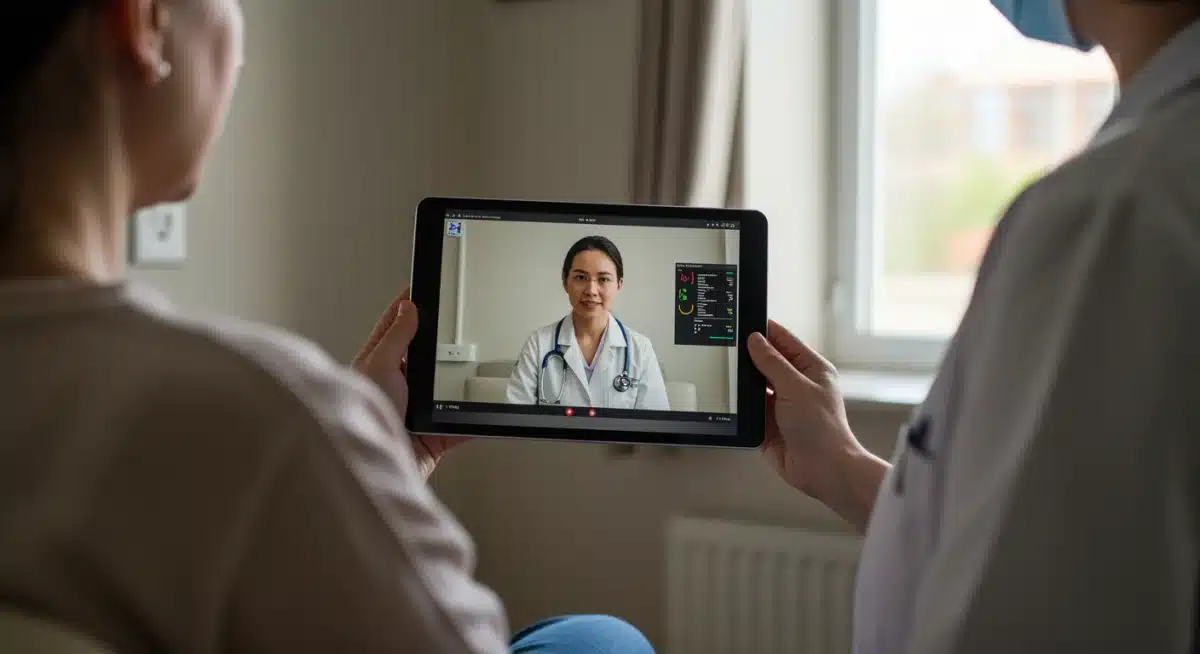
Post-discharge, AI plays a crucial role in remote patient monitoring. Wearable devices and home sensors can collect vital signs and other health data, which AI algorithms then analyze in real-time. Any deviation from a patient’s baseline or predefined thresholds can trigger alerts to the care team, allowing for timely intervention before a minor issue escalates into a readmission event. This continuous oversight provides a safety net for patients transitioning back home, particularly those with chronic conditions.

5. Optimizing Resource Allocation
By accurately predicting readmission risk, healthcare organizations can optimize the allocation of scarce resources. For example, high-risk patients can be prioritized for intensive post-discharge support, while those at lower risk may require less frequent interventions. This strategic allocation ensures that resources are directed where they are most needed, maximizing their impact and improving overall efficiency.
The Path to 15% Reduction by 2026: Key Strategies and Technologies
Achieving a 15% reduction in AI Hospital Readmissions by 2026 is an ambitious yet attainable goal. It requires a concerted effort involving technological adoption, process re-engineering, and cultural shifts within healthcare organizations. Here are key strategies and technologies that will drive this transformation:
1. Robust Data Infrastructure and Integration
The foundation of effective AI in healthcare is a robust and integrated data infrastructure. This includes comprehensive EHRs, interoperable systems that allow seamless data exchange between different healthcare providers, and the ability to incorporate data from various sources such as patient-generated health data, social determinants of health, and claims data. Cloud-based platforms and standardized data formats will be crucial for facilitating this integration.
2. Advanced Machine Learning Models
Continual development and refinement of machine learning models are essential. This involves exploring cutting-edge techniques such as deep learning for analyzing unstructured data (e.g., clinical notes, imaging reports) and reinforcement learning for optimizing dynamic care pathways. The models must be continuously trained and validated on diverse datasets to ensure their accuracy and generalizability across different patient populations and healthcare settings.
3. Explainable AI (XAI)
For AI to be widely adopted in clinical practice, healthcare professionals need to trust its recommendations. Explainable AI (XAI) addresses this need by providing transparency into how AI algorithms arrive at their predictions. Instead of simply providing a risk score, XAI can explain the specific factors that contributed to a patient’s high readmission risk, empowering clinicians to make informed decisions and build confidence in AI tools.
4. Seamless Clinical Workflow Integration
AI tools must be seamlessly integrated into existing clinical workflows to maximize their utility. This means that AI-generated insights should be easily accessible within the EHR system, providing actionable recommendations at the point of care. Intuitive user interfaces and user-friendly dashboards are critical for ensuring that clinicians can effectively use these tools without adding to their cognitive load.
5. Interdisciplinary Care Teams
While AI provides the insights, human intervention remains paramount. Interdisciplinary care teams, including physicians, nurses, social workers, pharmacists, and community health workers, must collaborate closely to act on AI-generated recommendations. AI serves as an intelligent assistant, augmenting human capabilities rather than replacing them.
6. Continuous Monitoring and Evaluation
The effectiveness of AI interventions needs to be continuously monitored and evaluated. This involves tracking readmission rates, patient outcomes, and cost savings to assess the impact of AI initiatives. Feedback loops should be established to continuously improve AI models and optimize care pathways based on real-world data.
Challenges and Considerations
While the promise of AI in reducing AI Hospital Readmissions is immense, several challenges need to be addressed for successful implementation:
1. Data Privacy and Security
Healthcare data is highly sensitive, and ensuring its privacy and security is paramount. Robust cybersecurity measures, compliance with regulations like HIPAA, and ethical data governance frameworks are essential to build trust and protect patient information.
2. Data Quality and Bias
The accuracy of AI models is heavily dependent on the quality of the data they are trained on. Incomplete, inaccurate, or biased data can lead to flawed predictions and perpetuate existing health disparities. Rigorous data cleaning, validation, and bias mitigation strategies are crucial.
3. Regulatory and Ethical Frameworks
As AI becomes more integrated into healthcare, clear regulatory and ethical frameworks are needed to guide its development and deployment. This includes guidelines for AI model validation, accountability for AI-driven decisions, and ensuring equitable access to AI-powered care.
4. Clinician Adoption and Training
Resistance to new technologies can be a barrier to adoption. Healthcare professionals need adequate training and education on how to effectively use AI tools, understand their limitations, and integrate them into their practice. Demonstrating the tangible benefits of AI can help overcome skepticism.
5. Cost of Implementation
Implementing advanced AI solutions can be costly, requiring significant investments in infrastructure, software, and personnel. Healthcare organizations need to carefully assess the return on investment and explore scalable solutions to ensure long-term sustainability.
Success Stories and Future Outlook
Several healthcare systems have already begun to implement AI-powered predictive analytics with promising results. For example, some hospitals have reported a significant reduction in readmission rates for specific conditions like heart failure and pneumonia by using AI to identify high-risk patients and tailor post-discharge interventions. These early successes provide a strong foundation for broader adoption and the ambitious goal of a 15% reduction nationwide.
Looking ahead to 2026 and beyond, the integration of AI in healthcare will only deepen. We can expect more sophisticated AI models that incorporate real-time physiological data from wearables, environmental factors, and even genomic information to create hyper-personalized risk profiles. The development of federated learning will allow AI models to be trained on decentralized datasets without compromising patient privacy, leading to more robust and generalizable predictions.
Furthermore, AI will play a critical role in proactive health management, shifting the focus from treating illness to preventing it. By identifying individuals at risk of developing chronic conditions or experiencing acute exacerbations, AI can enable preventative interventions that keep patients healthier and out of the hospital in the first place. This paradigm shift will not only reduce readmissions but also transform the overall delivery of healthcare, making it more predictive, preventative, personalized, and participatory.
Conclusion
The reduction of hospital readmissions is a critical imperative for modern healthcare, driven by both economic necessity and the ethical commitment to patient well-being. Artificial intelligence, particularly through predictive analytics, offers a powerful and transformative solution to this complex challenge. By enabling early risk identification, personalized discharge planning, enhanced patient engagement, and optimized resource allocation, AI is poised to revolutionize how healthcare providers manage post-discharge care.
The ambitious target of reducing AI Hospital Readmissions by 15% by 2026 is not just a statistical goal; it represents a future where healthcare is more efficient, equitable, and ultimately, more humane. While challenges related to data, ethics, and implementation persist, the benefits of AI in improving patient outcomes and reducing healthcare costs are undeniable. By embracing innovation, fostering collaboration, and investing in the necessary infrastructure, the healthcare industry can harness the full potential of AI to create a healthier future for all.
The journey towards this future requires a collective effort from policymakers, healthcare leaders, technology developers, and frontline clinicians. As AI continues to evolve, its capacity to empower healthcare providers and enhance patient care will only grow, paving the way for a healthcare system that is truly intelligent, proactive, and patient-centered. The era of AI-driven readmission reduction is here, and its impact will be profound.