Ethical AI in Recruitment: A 4-Step Plan to Ensure Fairness and Transparency by Q3 2026

The landscape of recruitment is undergoing a profound transformation, largely driven by the integration of Artificial Intelligence (AI). From sifting through countless resumes to predicting candidate success, AI tools promise unprecedented efficiency and insight. However, with great power comes great responsibility. The deployment of AI in such a sensitive area as human capital demands a rigorous commitment to ethics. Without careful consideration, AI systems can inadvertently perpetuate or even amplify existing biases, leading to unfair hiring practices and significant reputational damage. This comprehensive guide outlines a strategic 4-step plan to implement ethical AI recruitment practices, ensuring fairness and transparency across your hiring processes by Q3 2026.
The stakes are incredibly high. A recent study by the National Bureau of Economic Research found that AI-powered hiring tools, when unchecked, can exhibit biases against certain demographic groups, making it harder for qualified candidates to secure opportunities. Conversely, ethically designed AI can unlock access to a broader, more diverse talent pool, foster genuine meritocracy, and enhance an organization’s overall performance and innovation. Our goal with this plan is not just to mitigate risks but to leverage AI as a force for good, building a more equitable and efficient recruitment ecosystem.
This plan is designed for HR leaders, talent acquisition specialists, data scientists, and organizational ethics committees committed to pioneering responsible AI adoption. It provides actionable steps, best practices, and a clear timeline to integrate ethical considerations at every stage of the AI recruitment lifecycle.
Understanding the Imperative of Ethical AI in Recruitment
Before diving into the steps, it’s crucial to grasp why ethical AI recruitment isn’t merely a compliance checkbox but a strategic imperative. The primary concerns revolve around bias, transparency, and accountability.
The Pervasive Problem of Bias
AI models learn from historical data. If this data reflects past human biases – for example, a disproportionate hiring of men for leadership roles – the AI will learn these biases and replicate them, even if unintentionally. This can manifest in various ways:
- Algorithmic Bias: When the algorithm itself is designed or trained in a way that favors one group over another.
- Data Bias: When the training data contains inherent societal biases, leading the AI to make discriminatory predictions.
- Interactional Bias: When the way users interact with or interpret AI outputs introduces bias.
Such biases can lead to a lack of diversity, legal challenges, and a damaged employer brand. Addressing bias is paramount for any organization committed to fair hiring.
The Black Box Dilemma: Lack of Transparency
Many advanced AI models, particularly deep learning networks, operate as ‘black boxes.’ It’s challenging to understand how they arrive at their decisions. In recruitment, this lack of transparency is problematic. Candidates deserve to understand why they were rejected, and organizations need to justify their hiring decisions, especially in the face of legal scrutiny. Explainable AI (XAI) is emerging as a critical field to address this, focusing on making AI decisions interpretable to humans.
Accountability and Governance
Who is responsible when an AI system makes a biased or unfair decision? Establishing clear lines of accountability and robust governance frameworks is essential. This includes defining roles, responsibilities, and oversight mechanisms for the entire AI recruitment lifecycle, from development to deployment and continuous monitoring.
Ignoring these ethical considerations is no longer an option. Regulatory bodies worldwide are beginning to introduce legislation specifically targeting AI bias in employment. Beyond compliance, a truly ethical approach to AI in recruitment builds trust, enhances candidate experience, and ultimately strengthens an organization’s talent pipeline and reputation.
The 4-Step Plan for Ethical AI Recruitment by Q3 2026
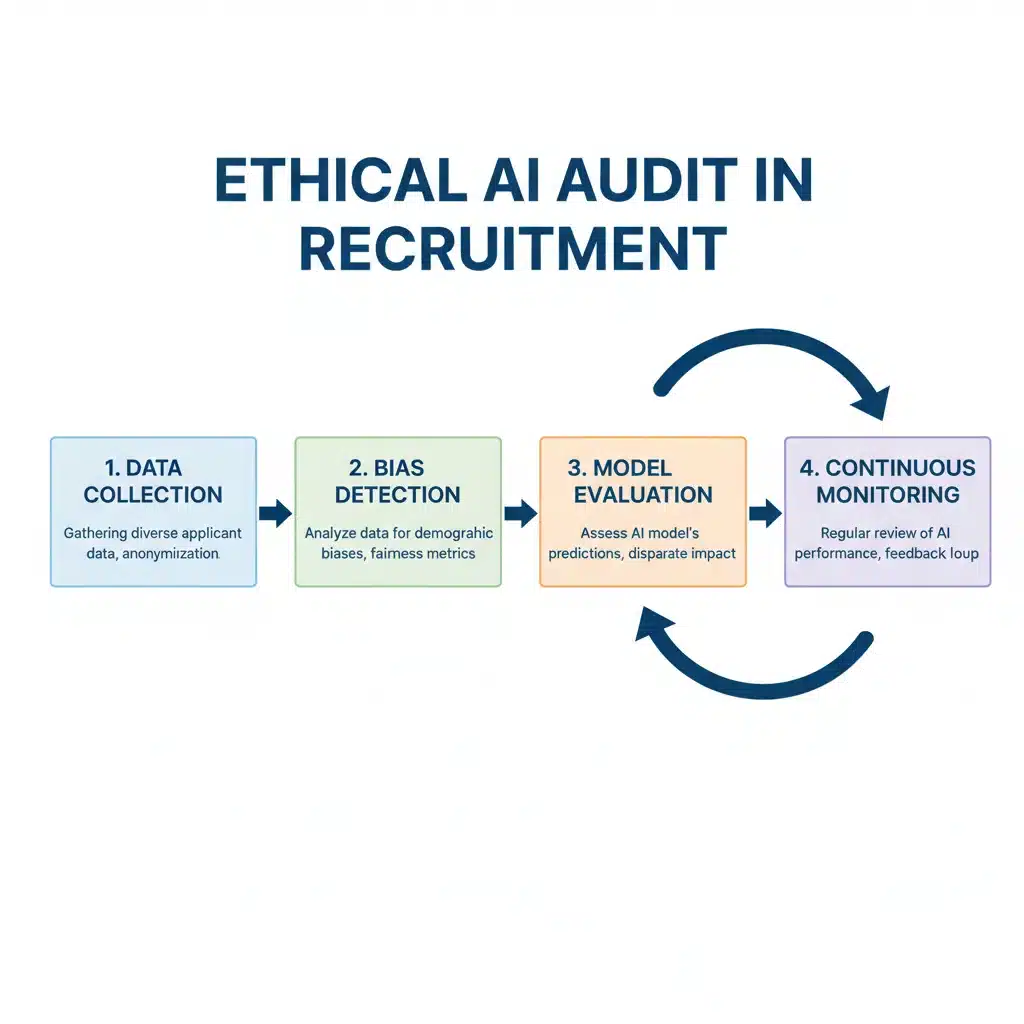
This plan outlines a structured approach to integrate ethical considerations into every phase of your AI recruitment strategy. Each step is designed to be iterative and adaptable, allowing for continuous improvement and responsiveness to evolving ethical standards and technological advancements.
Step 1: Establish an Ethical AI Governance Framework (Target: Q4 2024)
The foundation of any successful ethical AI recruitment initiative is a robust governance framework. This step is about setting the rules, defining responsibilities, and creating a culture of ethical AI use within your organization.
Actionable Sub-Steps:
- Form an Ethical AI Committee/Task Force: Assemble a cross-functional team comprising representatives from HR, Legal, IT, Data Science, Diversity & Inclusion, and Ethics. This committee will be responsible for setting policies, overseeing implementation, and arbitrating ethical dilemmas.
- Develop an Ethical AI Policy for Recruitment: Draft a comprehensive policy that clearly articulates your organization’s commitment to ethical AI in hiring. This policy should cover principles such as fairness, transparency, accountability, data privacy, and human oversight. It should also define prohibited uses of AI and outline a clear process for addressing grievances.
- Define Roles and Responsibilities: Clearly delineate who is responsible for what. For example, who trains the AI models, who monitors for bias, who reviews AI-generated recommendations, and who makes the final hiring decisions.
- Integrate Ethical Considerations into Vendor Selection: If you’re using third-party AI recruitment tools, ensure that ethical considerations are a primary criterion in your vendor selection process. Demand transparency about their algorithms, data practices, and bias mitigation strategies. Include ethical clauses in all vendor contracts.
- Establish a Whistleblower Mechanism: Create a safe and confidential channel for employees and candidates to report concerns about AI bias or unethical practices. This mechanism should be clearly communicated and protected by anti-retaliation policies.
Key Deliverables for Step 1:
- Charter for Ethical AI Committee.
- Approved Ethical AI Policy for Recruitment.
- Updated Vendor Selection Criteria and contract templates.
- Communication plan for whistleblower mechanism.
Step 2: Implement Robust Bias Detection and Mitigation Strategies (Target: Q2 2025)
Once the governance framework is in place, the next critical step is to actively identify and address biases within your AI recruitment systems. This requires a proactive and continuous approach.
Actionable Sub-Steps:
- Audit Existing Data for Bias: Before training any AI model, rigorously audit your historical recruitment data (resumes, performance reviews, interview notes, hiring outcomes) for demographic imbalances or proxy variables that could lead to discrimination. This involves statistical analysis and expert review.
- Employ Bias Detection Tools and Metrics: Utilize specialized tools and metrics to quantify and detect various forms of bias (e.g., demographic parity, equal opportunity, disparate impact) within your AI models. This should be an ongoing process, not a one-time check.
- Implement Bias Mitigation Techniques: Once bias is detected, apply appropriate mitigation strategies. These can include:
- Pre-processing techniques: Adjusting the training data to remove or reduce bias.
- In-processing techniques: Modifying the AI algorithm during training to minimize bias.
- Post-processing techniques: Adjusting the model’s output to achieve fairer outcomes.
- Data augmentation: Creating synthetic data to balance underrepresented groups.
- Diversify Data Sources: Actively seek out and incorporate diverse data sources to train your AI models. This can include data from various geographies, socioeconomic backgrounds, and professional experiences to create a more representative training set.
- Blind AI Training and Evaluation: Where possible, blind candidate identifying information (like names, photos, gender, age, ethnicity) from the AI during initial screening phases to prevent unconscious bias from influencing early assessments.
Key Deliverables for Step 2:
- Comprehensive data bias audit reports.
- Implementation of bias detection and mitigation software/techniques.
- Regular bias assessment reports for all AI recruitment tools.
Step 3: Ensure Transparency and Explainability (Target: Q4 2025)
Building trust in ethical AI recruitment requires demystifying its operations. Candidates and stakeholders need to understand how decisions are made, not just what the decisions are.
Actionable Sub-Steps:
- Prioritize Explainable AI (XAI) Models: When selecting or developing AI tools, favor those that offer a degree of explainability. This means being able to articulate the features or factors that led to a particular recommendation or decision.
- Develop Clear Communication Protocols: Create standardized templates and processes for communicating AI’s role in the hiring process to candidates. This includes clearly stating when AI is used, what data it utilizes, and how it informs decisions. Provide candidates with avenues to request explanations for outcomes.
- Implement Human-in-the-Loop Oversight: AI should augment human decision-making, not replace it entirely. Ensure that human recruiters and hiring managers have the final say and are empowered to override AI recommendations if they suspect bias or unfairness. They should also be trained to critically evaluate AI outputs.
- Document Decision-Making Processes: Maintain meticulous records of how AI models are trained, evaluated, and deployed. Document all changes, bias mitigation efforts, and human interventions. This documentation is crucial for audits and legal compliance.
- Provide Training on AI Explainability: Train recruiters and hiring managers on how to interpret AI outputs and explain them to candidates. They should understand the limitations of AI and be able to articulate the rationale behind decisions informed by AI.
Key Deliverables for Step 3:
- Guidelines for selecting XAI-compatible tools.
- Standardized candidate communication templates regarding AI use.
- Defined human oversight protocols for AI-driven decisions.
- Comprehensive documentation of AI model development and deployment.
Step 4: Continuous Monitoring, Auditing, and Iteration (Target: Q3 2026)
Ethical AI recruitment is not a one-time project; it’s an ongoing commitment. The final step focuses on establishing mechanisms for continuous improvement and adaptation.
Actionable Sub-Steps:
- Regular Ethical AI Audits: Conduct periodic, independent audits of your AI recruitment systems. These audits should assess for bias, fairness, transparency, and compliance with internal policies and external regulations. Consider both internal and external auditors.
- Performance Monitoring and Feedback Loops: Continuously monitor the performance of your AI tools, not just for efficiency but also for fairness metrics. Establish feedback loops where candidates, employees, and hiring managers can provide input on the AI’s impact.
- Retraining and Model Updates: AI models can drift over time as new data becomes available or societal norms change. Establish a schedule for regular retraining and updating of your AI models to ensure they remain fair, accurate, and relevant.
- Stay Abreast of Regulations and Best Practices: The field of AI ethics is rapidly evolving. Designate resources to continuously monitor new research, emerging regulations, and industry best practices in ethical AI and recruitment.
- Public Reporting and Accountability: Consider publishing regular transparency reports on your AI recruitment practices, including efforts to mitigate bias and ensure fairness. This demonstrates a strong commitment to accountability and builds public trust.
Key Deliverables for Step 4:
- Schedule for recurring internal and external ethical AI audits.
- System for continuous monitoring of AI fairness metrics.
- Protocol for scheduled AI model retraining and updates.
- Annual Ethical AI Transparency Report.

The Broader Impact of Ethical AI in Recruitment
Implementing an ethical AI recruitment strategy extends far beyond mere compliance; it fundamentally reshapes an organization’s identity and operational efficacy. When AI is used responsibly, it doesn’t just improve hiring outcomes; it elevates the entire organizational culture and strengthens its market position.
Enhanced Diversity and Inclusion
By actively mitigating bias, ethical AI can dismantle systemic barriers that have historically prevented diverse candidates from accessing opportunities. This leads to a more diverse workforce, which in turn fosters greater innovation, better problem-solving capabilities, and a more representative organizational culture. Diverse teams are proven to outperform homogenous ones, making ethical AI a direct contributor to business success.
Improved Candidate Experience
Transparency and fairness in the hiring process significantly improve the candidate experience. When applicants understand how decisions are made and feel that they are being evaluated equitably, their perception of your employer brand improves, regardless of the outcome. This positive experience can lead to a stronger talent pipeline, as satisfied candidates are more likely to recommend your organization to others and reapply for future roles.
Stronger Employer Brand and Reputation
Organizations known for their commitment to ethical practices, especially in sensitive areas like AI, gain a significant competitive advantage. A strong ethical stance attracts top talent, appeals to ethically conscious customers and investors, and builds a resilient reputation. Conversely, a single instance of AI bias can severely damage an employer brand, leading to a loss of trust and difficulty in attracting future talent.
Legal and Regulatory Compliance
The regulatory landscape around AI is rapidly evolving. Proactively implementing ethical AI practices positions your organization ahead of the curve, minimizing legal risks and ensuring compliance with emerging data privacy and AI fairness regulations. This foresight can save significant resources in legal fees and potential fines down the line.
Increased Efficiency and Objectivity
While the focus is on ethics, the core benefits of AI—efficiency and objectivity—are not lost. Ethical AI streamlines the recruitment process by automating repetitive tasks, allowing recruiters to focus on strategic initiatives and human connection. By reducing human cognitive biases, ethical AI also introduces a higher degree of objectivity into initial screening, ensuring that candidates are evaluated based on relevant qualifications and potential.
Fostering Innovation and Trust in AI
By demonstrating responsible AI adoption, your organization contributes to the broader societal trust in AI technology. This not only encourages further innovation within your own company but also helps shape a positive narrative around AI’s potential to benefit humanity, rather than exacerbate inequalities.
Challenges and Considerations
While the benefits of ethical AI recruitment are clear, implementing this plan comes with its own set of challenges:
- Data Availability and Quality: Sourcing diverse and high-quality data for training and auditing can be difficult, especially for smaller organizations or niche roles.
- Technical Complexity: Detecting and mitigating complex biases requires specialized skills in data science and machine learning ethics.
- Evolving Standards: The definition of ‘fairness’ and ‘bias’ in AI is still a subject of active debate and research, meaning standards can change.
- Resource Investment: Implementing and maintaining ethical AI practices requires significant investment in technology, training, and personnel.
- Organizational Buy-in: Securing commitment from all levels of the organization, from leadership to frontline recruiters, is crucial for success.
Addressing these challenges requires a pragmatic approach, continuous learning, and a willingness to adapt. It’s not about achieving perfection overnight but about making consistent progress towards a more ethical and equitable future.
Conclusion: A Future of Fair and Transparent Hiring
The journey towards fully implementing ethical AI recruitment by Q3 2026 is ambitious but entirely achievable. By following this 4-step plan—establishing robust governance, meticulously detecting and mitigating bias, ensuring transparency and explainability, and committing to continuous monitoring—organizations can harness the transformative power of AI while upholding the highest ethical standards.
The future of recruitment is undoubtedly AI-driven, but it must also be human-centered. Ethical AI is not just about avoiding harm; it’s about actively creating a more inclusive, fair, and meritocratic hiring landscape for everyone. It’s about building trust, fostering innovation, and ultimately, ensuring that technology serves humanity’s best interests in the quest for talent. Embrace this plan, and lead the way in shaping a recruitment future where fairness and transparency are not just ideals, but intrinsic components of every hiring decision.