AI Bias Detection Tools 2026: Top 4 US Enterprise Solutions

In 2026, navigating the complexities of artificial intelligence requires robust mechanisms to ensure fairness; this article compares the top four AI bias detection tools available for US enterprises, offering insights into their functionalities and impact.
The rapid integration of artificial intelligence across US enterprises has ushered in an era of unprecedented innovation, but also significant challenges, particularly concerning ethical deployment. One of the most critical issues is algorithmic bias, which can perpetuate and even amplify existing societal inequalities. Understanding and mitigating this bias is paramount, making AI bias detection tools indispensable for any responsible organization in 2026.
The Imperative of AI Bias Detection in 2026
As AI systems become more autonomous and influential in decision-making processes, from hiring to loan approvals and even medical diagnostics, the potential for biased outcomes poses a substantial risk. These biases often arise from skewed training data, flawed algorithm design, or even subtle human prejudices embedded in system development. Detecting and addressing these issues is not merely an ethical consideration but a regulatory and business necessity.
In 2026, regulatory bodies in the US are increasingly scrutinizing AI deployments, with new compliance frameworks emerging that mandate transparency and fairness. Enterprises that fail to implement robust bias detection and mitigation strategies face not only reputational damage but also significant legal and financial penalties. Proactive engagement with these tools allows companies to build trust, foster equitable outcomes, and maintain a competitive edge in a rapidly evolving digital landscape.
Understanding Algorithmic Bias
Algorithmic bias manifests in various forms, often subtly, making it challenging to identify without specialized tools. It can lead to discriminatory results against certain demographic groups, unfair resource allocation, and even privacy violations. Identifying the source and nature of these biases is the first step toward effective remediation.
- Data Bias: Occurs when training data is unrepresentative, incomplete, or reflects historical prejudices.
- Algorithmic Bias: Arises from the design of the algorithm itself, such as specific feature weighting or model architecture choices.
- Interaction Bias: Develops when user interactions inadvertently reinforce existing biases, creating feedback loops.
- Cognitive Bias: Human developers’ unconscious biases can be inadvertently coded into AI systems.
The ethical implications extend beyond individual cases, potentially eroding public trust in AI technology as a whole. For US enterprises, a commitment to fair AI is becoming a cornerstone of corporate social responsibility and sustainable growth.
Key Features of Leading AI Bias Detection Tools
The market for AI bias detection tools has matured significantly by 2026, offering a diverse array of solutions. While each tool has its unique strengths, several core features are universally sought after by US enterprises looking to effectively manage algorithmic fairness. These features define the robustness and utility of a bias detection platform, influencing its ability to integrate seamlessly into existing AI development lifecycles.
Effective tools typically provide comprehensive analysis capabilities, allowing users to scrutinize various stages of the AI model lifecycle, from data ingestion to model deployment and monitoring. They go beyond simple statistical checks, incorporating advanced techniques to uncover hidden biases and offer actionable insights for remediation. The focus is on providing a holistic view of fairness, not just isolated metrics.
Essential Functionalities for Enterprises
Enterprises require tools that are not only powerful but also user-friendly and scalable. The ability to integrate with diverse AI frameworks and cloud environments is crucial. Furthermore, robust reporting and visualization features are necessary to communicate bias findings to non-technical stakeholders and regulatory bodies.
- Pre-training Data Analysis: Identifies biases in datasets before model training, preventing their propagation.
- Model-Agnostic Bias Detection: Works across various AI models (e.g., machine learning, deep learning) without requiring specific architectural knowledge.
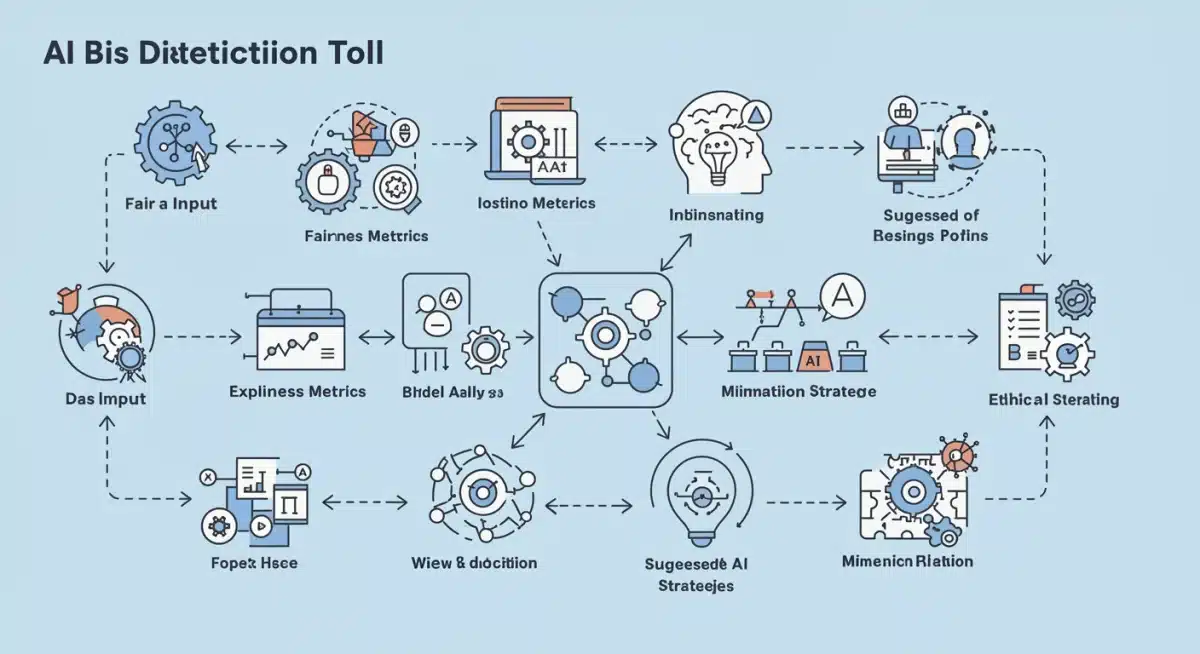
- Fairness Metrics & Explainability (XAI): Quantifies bias using established metrics and provides explanations for biased outcomes.
- Bias Mitigation Recommendations: Offers concrete strategies and techniques to reduce or eliminate identified biases.
- Continuous Monitoring: Tracks model performance and fairness over time, alerting to new biases that may emerge post-deployment.
These functionalities collectively empower enterprises to adopt a proactive stance against AI bias, ensuring their systems are not only efficient but also equitable and compliant with evolving ethical standards.
Solution 1: IBM Watson OpenScale
IBM Watson OpenScale stands as a formidable contender in the AI bias detection landscape of 2026, offering a comprehensive platform designed for large-scale enterprise deployments. Its strength lies in its ability to monitor and manage AI models across their entire lifecycle, regardless of where they were built or deployed. This vendor-agnostic approach is particularly appealing to US enterprises utilizing diverse AI ecosystems.
OpenScale provides real-time insights into AI model performance, fairness, and explainability. It leverages a robust set of fairness metrics and advanced algorithms to detect bias in predictions, even for models operating in production. The platform’s ability to automatically detect and explain bias, coupled with its mitigation capabilities, makes it a powerful tool for maintaining ethical AI practices.
Key Strengths and Limitations
The primary strength of IBM Watson OpenScale is its holistic approach to AI governance, integrating bias detection with model explainability and drift detection. This allows for a unified view of model health and ethical compliance.
- Strengths:
- Comprehensive bias detection across various model types and deployment environments.
- Real-time monitoring and alerts for fairness deviations.
- Strong explainability features to understand bias sources.
- Integration with a broad range of AI platforms and cloud services.
- Limitations:
- Can be complex to set up and configure for organizations without significant AI expertise.
- Pricing structure may be a barrier for smaller enterprises.
- Requires substantial data access for effective monitoring, which can raise data privacy concerns.
For large US enterprises with complex AI portfolios, IBM Watson OpenScale offers a mature and scalable solution that addresses the multifaceted challenges of AI ethics and governance head-on.

Solution 2: Google Cloud’s Explainable AI (XAI) Toolkit
Google Cloud’s Explainable AI (XAI) Toolkit, particularly its fairness features, provides US enterprises with powerful capabilities for understanding and mitigating bias within their AI models. Integrated directly into the Google Cloud ecosystem, this toolkit is an attractive option for organizations already leveraging Google’s infrastructure for their AI development and deployment. It emphasizes not just detecting bias, but also making AI decisions transparent and interpretable.
The XAI Toolkit offers tools like What-If Tool and Fairness Indicators, which allow developers and data scientists to interactively explore model behavior, test hypothetical scenarios, and evaluate fairness metrics across different demographic subgroups. This hands-on approach empowers teams to identify specific areas of bias and iteratively refine their models for more equitable outcomes. Its strength lies in its developer-centric design and seamless integration with other Google Cloud AI services.
Advantages for Cloud-Native Enterprises
For US enterprises heavily invested in Google Cloud, the XAI Toolkit offers unparalleled integration and ease of use. It directly supports models built on TensorFlow, Scikit-learn, and other popular frameworks within the Google Cloud environment, streamlining the bias detection process.
- Strengths:
- Deep integration with Google Cloud AI services (e.g., Vertex AI).
- Interactive tools (e.g., What-If Tool) for exploratory bias analysis.
- Strong focus on model explainability alongside fairness metrics.
- Scalable for large datasets and complex models within the Google Cloud infrastructure.
- Limitations:
- Primarily optimized for models deployed on Google Cloud, potentially less flexible for multi-cloud strategies.
- Requires a certain level of technical expertise to fully leverage its advanced features.
- Fairness metrics are robust but might require custom implementation for highly specific compliance needs.
Google Cloud’s XAI Toolkit is an excellent choice for US enterprises seeking an integrated, cloud-native solution for ensuring fairness and transparency in their AI applications.
Solution 3: Microsoft Azure Responsible AI Dashboard
Microsoft Azure’s Responsible AI Dashboard is a unified interface that brings together various tools for assessing, understanding, and mitigating AI bias within the Azure ecosystem. For US enterprises operating predominantly on Azure, this dashboard provides a centralized and intuitive way to manage the ethical aspects of their AI deployments. It reflects Microsoft’s commitment to responsible AI, offering a suite of functionalities that simplify complex ethical considerations.
The dashboard integrates capabilities such as error analysis, fairness assessment, model interpretability, and causal analysis. This allows users to not only detect biases but also to understand why they occur and how they impact different groups. By providing a holistic view, the Responsible AI Dashboard empowers data scientists and business leaders to make informed decisions about model fairness and deploy AI systems with greater confidence.
Integrated Approach to AI Ethics
Microsoft’s approach with the Responsible AI Dashboard is to provide a comprehensive toolkit that addresses multiple facets of responsible AI, not just bias. This integrated strategy helps enterprises build and manage AI systems that are fair, transparent, and robust.
- Strengths:
- Single pane of glass for various responsible AI tools (fairness, interpretability, error analysis).
- Seamless integration with Azure Machine Learning and other Azure services.
- User-friendly interface, making complex AI ethics more accessible.
- Strong support for open-source AI frameworks alongside Azure-native solutions.
- Limitations:
- Best utilized by enterprises deeply embedded in the Azure cloud environment.
- While comprehensive, advanced customization for specific bias definitions might require additional development.
- The breadth of features can initially be overwhelming for new users.
The Microsoft Azure Responsible AI Dashboard is an ideal solution for US enterprises seeking an integrated, cloud-based platform for managing AI ethics, with a particular emphasis on fairness and transparency within their Azure cloud environment.
Solution 4: Fiddler AI Observability Platform
Fiddler AI Observability Platform offers a unique and powerful approach to AI bias detection through its focus on AI observability. Unlike solutions primarily focused on pre-deployment analysis, Fiddler specializes in monitoring AI models in production, providing continuous insights into their behavior, performance, and fairness. This real-time monitoring capability is crucial for US enterprises, as biases can emerge or evolve even after an AI model has been deployed.
Fiddler’s platform allows organizations to detect data drift, model drift, and performance degradation, alongside identifying and explaining bias in production environments. It provides detailed dashboards and alerts that highlight fairness issues across different segments of the data, helping enterprises quickly pinpoint and address unexpected biases. Its strength lies in its ability to provide granular insights into why models are making certain predictions and how those predictions might be biased in real-world scenarios.
Real-time Bias Monitoring and Explanation
The real-time aspect of Fiddler’s platform is a significant advantage, enabling enterprises to maintain constant vigilance over their AI systems. This is particularly important for high-stakes applications where even minor biases can have substantial consequences.
- Strengths:
- Exceptional real-time bias detection and monitoring in production.
- Strong explainable AI (XAI) features to understand the root causes of bias.
- Proactive alerting system for fairness and performance anomalies.
- Model-agnostic, supporting diverse AI frameworks and deployment environments.
- Limitations:
- Focus on post-deployment observability means pre-training data bias detection might require supplementary tools.
- Can incur higher operational costs due to continuous monitoring requirements.
- Integration with existing MLOps pipelines might require dedicated engineering effort.
For US enterprises prioritizing continuous monitoring and real-time bias detection in their production AI systems, Fiddler AI Observability Platform offers an unparalleled solution that ensures ongoing fairness and ethical compliance.
| Key Feature | Description |
|---|---|
| Real-time Monitoring | Continuously track AI models in production for emerging biases and performance degradation. |
| Explainable AI (XAI) | Tools to understand why AI models make certain decisions, crucial for identifying bias sources. |
| Fairness Metrics | Quantitative measures to assess and quantify the degree of bias across different demographic groups. |
| Mitigation Strategies | Recommendations and techniques to reduce or eliminate identified algorithmic biases. |
Frequently Asked Questions About AI Bias Detection
AI bias refers to systematic and unfair discrimination by an AI system against certain individuals or groups. For US enterprises, it leads to legal risks, reputational damage, financial losses, and erosion of customer trust, hindering equitable service delivery and innovation.
These tools analyze data and model predictions to identify statistical disparities across protected attributes. They use fairness metrics, model interpretability techniques, and explainable AI (XAI) to pinpoint where and why biases occur, often suggesting mitigation strategies.
They address various biases, including data bias (in training data), algorithmic bias (in model design), and interaction bias (from user feedback loops). Tools focus on ensuring fairness in areas like hiring, lending, and healthcare decisions.
No, while some tools excel at pre-deployment analysis, many leading solutions also offer continuous, real-time monitoring of AI models in production. This helps detect and address biases that may emerge or evolve after initial deployment, ensuring ongoing fairness.
Enterprises should consider their existing AI infrastructure, budget, specific regulatory requirements, and the types of models used. Factors like integration capabilities, ease of use, scalability, and the comprehensiveness of fairness metrics are crucial for an informed decision.
Conclusion
The landscape of AI bias detection tools in 2026 presents US enterprises with advanced capabilities to navigate the ethical complexities of artificial intelligence. Solutions like IBM Watson OpenScale, Google Cloud’s XAI Toolkit, Microsoft Azure Responsible AI Dashboard, and Fiddler AI Observability Platform each offer distinct strengths, catering to varying organizational needs and technical environments. The choice of tool ultimately depends on an enterprise’s specific AI strategy, existing cloud infrastructure, and the criticality of real-time monitoring versus comprehensive lifecycle management. What remains clear is that investing in robust AI bias detection is no longer optional but a fundamental requirement for fostering trust, ensuring compliance, and building a truly responsible and equitable AI future.