AI in Personalized Medicine: U.S. Practitioner’s Q4 2026 Guide

AI in Personalized Medicine: What U.S. Practitioners Need to Know for Q4 2026 Implementations
The landscape of healthcare is undergoing a profound transformation, driven by the rapid advancements in artificial intelligence (AI). For U.S. practitioners, the integration of AI personalized medicine is not a distant future but an imminent reality, with significant implementations anticipated by Q4 2026. This comprehensive guide aims to equip healthcare professionals with the knowledge and foresight necessary to navigate this evolving terrain, ensuring they are well-prepared to harness the power of AI for enhanced patient care.
Personalized medicine, at its core, is about tailoring medical treatment to the individual characteristics of each patient. It’s a departure from the “one-size-fits-all” approach, recognizing that each person’s genetic makeup, lifestyle, and environment contribute uniquely to their health. AI, with its capacity to process and analyze vast amounts of complex data, is the catalyst propelling personalized medicine into a new era of precision and efficacy. The implications for diagnostics, prognostics, drug discovery, and treatment optimization are nothing short of revolutionary.
The Dawn of Precision: Understanding AI’s Role in Personalized Medicine
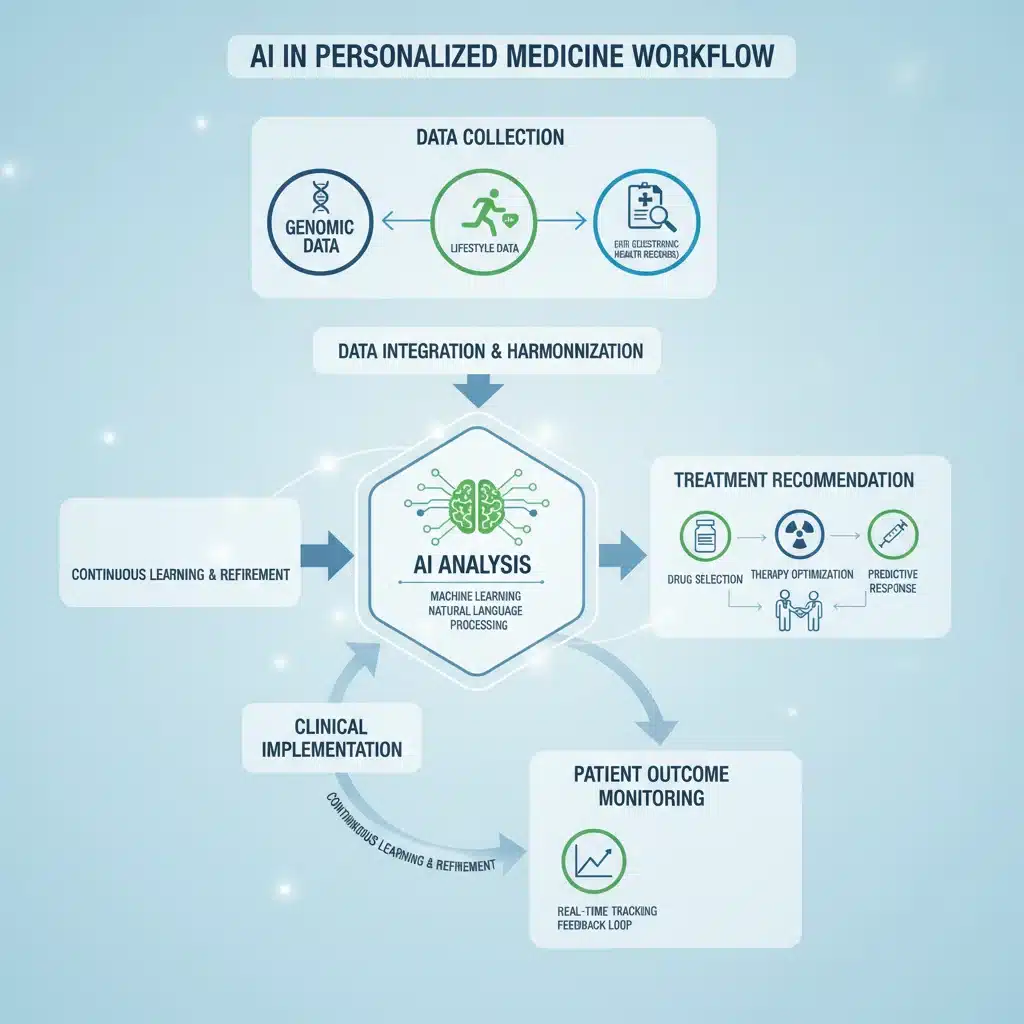
The synergy between AI and personalized medicine promises to fundamentally reshape how healthcare is delivered. AI algorithms can analyze patient data – including genomic information, electronic health records (EHRs), imaging data, and even data from wearable devices – to identify patterns and make predictions that are beyond human cognitive capabilities. This enables a level of precision in diagnosis and treatment selection that was previously unimaginable.
Genomic Data Analysis and Disease Prediction
One of the most impactful applications of AI personalized medicine lies in genomics. AI can rapidly sequence and interpret genomic data, identifying genetic predispositions to diseases, predicting drug responses, and even pinpointing the exact mutations driving a patient’s cancer. This allows for proactive screening, early intervention, and highly targeted therapies, moving healthcare from reactive to predictive and preventive.
Optimizing Treatment Strategies with AI
For conditions like cancer, autoimmune diseases, and chronic illnesses, AI can aid in selecting the most effective treatment protocols. By comparing a patient’s unique biological profile with vast databases of clinical trial results and real-world outcomes, AI can recommend therapies with the highest probability of success and the fewest side effects. This not only improves patient outcomes but also reduces the trial-and-error often associated with conventional medicine.
Drug Discovery and Development Acceleration
The drug discovery process is notoriously long and expensive. AI is dramatically accelerating this by identifying potential drug candidates, predicting their efficacy and toxicity, and optimizing their molecular structures. This drastically cuts down the time and cost of bringing new, personalized medicines to market, directly benefiting patients who require highly specific treatments.
Real-time Monitoring and Proactive Intervention
Wearable devices and remote monitoring tools, when integrated with AI, can provide continuous insights into a patient’s health. AI algorithms can detect subtle changes in vital signs or activity patterns that might indicate an impending health crisis, allowing practitioners to intervene proactively. This is particularly valuable for managing chronic conditions and preventing hospital readmissions.
Navigating the Regulatory Landscape: What U.S. Practitioners Must Know for Q4 2026
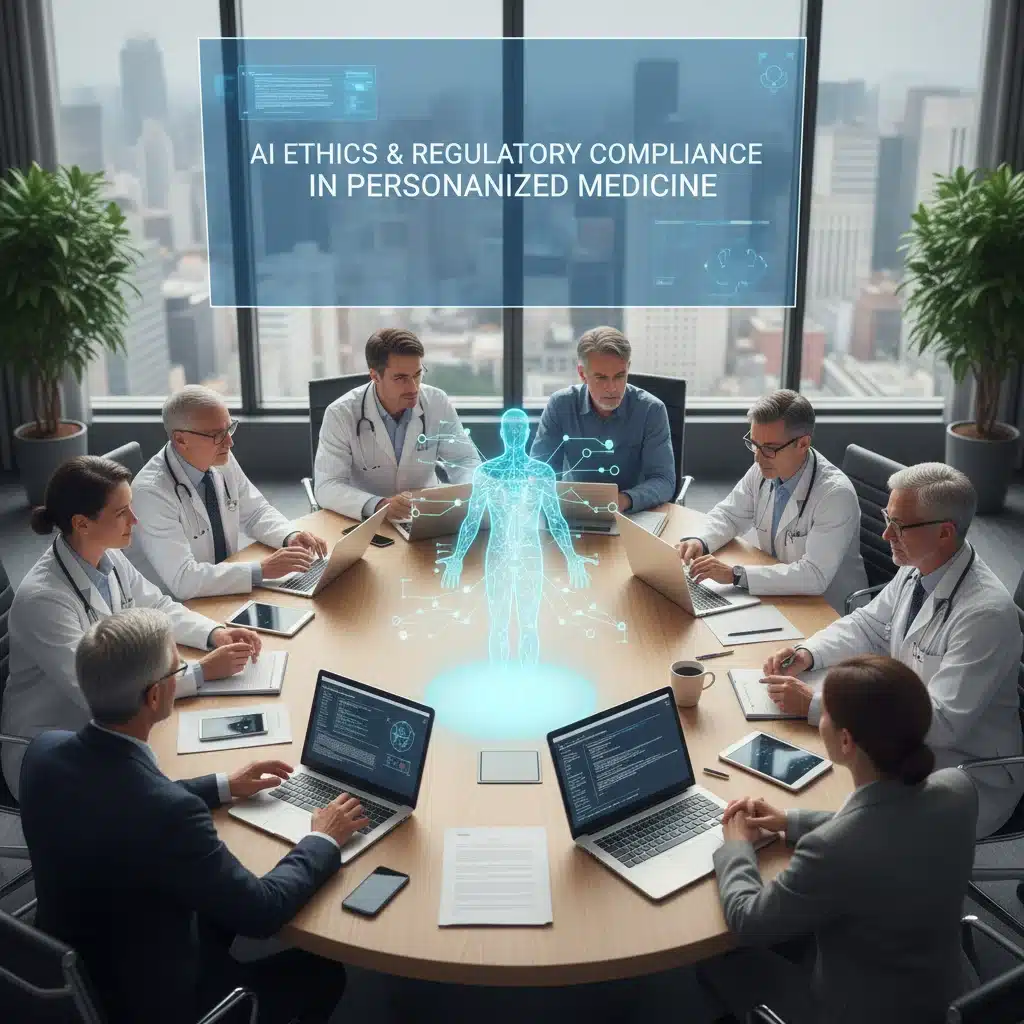
As AI personalized medicine rapidly advances, so too does the need for robust regulatory frameworks. U.S. practitioners must be acutely aware of the evolving regulatory environment to ensure compliance and ethical practice. Q4 2026 is a critical juncture, as many anticipated guidelines and regulations are expected to be firmly in place or undergoing significant updates.
FDA Oversight of AI in Medical Devices and Diagnostics
The U.S. Food and Drug Administration (FDA) plays a pivotal role in regulating AI-powered medical devices and diagnostic tools. Practitioners need to understand the FDA’s evolving approach to Software as a Medical Device (SaMD) and its framework for AI/Machine Learning (ML)-based SaMD. This includes considerations for premarket review, postmarket surveillance, and the management of "locked" versus "adaptive" algorithms.
The FDA’s emphasis on transparency, explainability, and the validation of AI algorithms is paramount. Practitioners should expect increased scrutiny on how AI models are developed, tested, and deployed, particularly concerning their performance across diverse patient populations to avoid bias.
HIPAA and Data Privacy in the Age of AI
The Health Insurance Portability and Accountability Act (HIPAA) remains the cornerstone of patient data privacy in the U.S. However, the sheer volume and sensitivity of data processed by AI personalized medicine systems introduce new complexities. Practitioners must ensure that all AI applications and data pipelines adhere strictly to HIPAA regulations, particularly regarding de-identification, data security, and patient consent for data use.
Understanding how AI vendors handle data, their security protocols, and their compliance with data sharing agreements will be critical. The ethical implications of using patient data for AI model training and development also require careful consideration and transparent communication with patients.
State-Specific Regulations and Licensing
Beyond federal regulations, various states may introduce their own guidelines or licensing requirements for the use of AI in clinical practice. Practitioners need to stay informed about these state-specific nuances, which could impact everything from telemedicine using AI tools to the interpretation of AI-generated diagnostic reports.
Ethical Considerations and Bias in AI Personalized Medicine
The promise of AI personalized medicine comes with significant ethical responsibilities. As practitioners prepare for Q4 2026, addressing issues of bias, fairness, transparency, and accountability will be crucial for building trust and ensuring equitable healthcare outcomes.
Addressing Algorithmic Bias
AI models are only as good as the data they are trained on. If training datasets lack diversity or reflect historical healthcare biases, the AI can perpetuate and even amplify those biases. This can lead to disparities in diagnosis or treatment recommendations for certain demographic groups. Practitioners must advocate for and utilize AI systems that have been rigorously tested for bias and are designed to promote equitable care.
Transparency and Explainability (XAI)
The "black box" nature of some AI algorithms poses a challenge in healthcare, where understanding the rationale behind a diagnosis or treatment recommendation is vital. Explainable AI (XAI) is emerging as a critical field, aiming to make AI decisions more interpretable to human practitioners. By Q4 2026, practitioners should seek out AI tools that offer a degree of explainability, allowing them to understand and validate the AI’s reasoning and maintain clinical oversight.
Patient Consent and Autonomy
The use of advanced AI in personalized medicine raises new questions about informed consent. Patients need to understand how their data is being used, how AI will influence their care decisions, and what recourse they have if they disagree with an AI-generated recommendation. Ensuring patient autonomy and engaging in transparent conversations will be more important than ever.
Practical Implementation Strategies for U.S. Practitioners
Implementing AI personalized medicine into existing clinical workflows requires strategic planning and a phased approach. For U.S. practitioners looking towards Q4 2026, focusing on infrastructure, training, and integration will be key.
Data Infrastructure and Interoperability
Effective AI relies on high-quality, accessible data. Healthcare institutions must invest in robust data infrastructure, including secure cloud storage, data lakes, and standardized data formats. Interoperability between different systems – EHRs, laboratory information systems, imaging platforms, and AI applications – is crucial for seamless data flow and comprehensive analysis. Practitioners should be involved in discussions about data governance and integration strategies within their organizations.
Training and Education for Healthcare Professionals
The successful adoption of AI in personalized medicine hinges on the preparedness of healthcare professionals. Training programs should focus not only on how to use AI tools but also on understanding their capabilities, limitations, and ethical implications. This includes educating physicians, nurses, and allied health professionals on data literacy, AI interpretation, and the responsible application of AI-generated insights in clinical decision-making.
Integration into Clinical Workflows
AI tools should augment, not replace, clinical judgment. Successful integration means embedding AI insights seamlessly into existing clinical workflows, making them easily accessible and actionable. This could involve AI-powered decision support systems within EHRs, automated diagnostic aids, or personalized treatment plan generators. Piloting AI solutions in specific departments or specialties before broader rollout can help identify and address integration challenges.
Collaboration with AI Developers and Data Scientists
Practitioners should actively collaborate with AI developers and data scientists. Their clinical expertise is invaluable in developing and refining AI models that are clinically relevant, accurate, and user-friendly. This interdisciplinary collaboration ensures that AI solutions are built to meet real-world clinical needs and address practical challenges.
Future Trends and Opportunities Beyond Q4 2026
While Q4 2026 marks a significant milestone, the evolution of AI personalized medicine will continue at an accelerating pace. U.S. practitioners should keep an eye on emerging trends and opportunities to stay at the forefront of healthcare innovation.
Digital Twins and Predictive Modeling
The concept of “digital twins” – virtual replicas of individual patients, built from their comprehensive biological and health data – is gaining traction. AI can use these digital twins to simulate the effects of different treatments, predict disease progression, and optimize interventions with unprecedented accuracy. This could revolutionize clinical trials and individualized treatment planning.
Federated Learning and Privacy-Preserving AI
To address data privacy concerns and leverage larger datasets, federated learning is emerging as a key technology. This approach allows AI models to be trained on decentralized datasets without the need to centralize raw patient data, enhancing privacy while still benefiting from collaborative learning. Practitioners should anticipate more privacy-preserving AI solutions becoming available.
AI-Powered Preventive Health and Wellness
Beyond treating illness, AI will increasingly play a role in promoting preventive health and wellness. Personalized health recommendations based on genetic predispositions, lifestyle data, and environmental factors will empower individuals to make informed choices to maintain their health and prevent disease proactively.
AI in Mental Health and Behavioral Science
The application of AI in mental health is also expanding, offering personalized interventions, early detection of mental health conditions, and support for behavioral therapies. AI can analyze speech patterns, facial expressions, and digital footprints to identify subtle indicators of mental distress, enabling earlier and more targeted support.
Challenges and How to Overcome Them
Despite its immense potential, the journey to fully implement AI personalized medicine is not without its challenges. Practitioners must be prepared to address these hurdles head-on.
Data Security and Cyber Threats
The sensitive nature of health data makes it a prime target for cyberattacks. Robust cybersecurity measures, including encryption, multi-factor authentication, and regular security audits, are essential. Continuous vigilance and investment in advanced security technologies will be necessary to protect patient information.
Cost of Implementation and ROI
Implementing AI solutions can be expensive, requiring significant investment in technology, infrastructure, and training. Healthcare organizations will need to carefully assess the return on investment (ROI) and identify areas where AI can deliver the most significant value, such as improved patient outcomes, reduced costs through efficiency, or enhanced diagnostic accuracy.
Physician Adoption and Resistance to Change
Resistance to new technologies is a natural human tendency. Overcoming this requires effective change management strategies, clear communication about the benefits of AI, and involving practitioners in the design and implementation process. Highlighting how AI can reduce administrative burden and improve patient care can foster greater adoption.
Maintaining the Human Element in Care
While AI offers incredible capabilities, it must always remain a tool to support human practitioners, not replace them. The empathetic, nuanced, and holistic aspects of patient care cannot be replicated by machines. Practitioners must ensure that the integration of AI enhances the human-to-human connection, allowing them to focus more on patient interaction and complex decision-making.
Conclusion: Preparing for an AI-Powered Future in Personalized Medicine
The advent of AI personalized medicine marks a pivotal moment in healthcare. For U.S. practitioners, Q4 2026 represents a critical period of accelerated adoption and regulatory maturation. By understanding the technological capabilities, navigating the regulatory and ethical complexities, and strategically implementing AI solutions, healthcare professionals can unlock unprecedented opportunities to deliver more precise, effective, and individualized care.
The future of medicine is personalized, and AI is the engine driving this transformation. Proactive engagement, continuous learning, and a commitment to ethical practice will empower U.S. practitioners to lead the way in this exciting new era, ultimately improving patient outcomes and shaping a healthier future for all.