Building Trust in AI: Ethical Data Sourcing & Usage for US Organizations (2026 Guide)

The rapid advancement of Artificial Intelligence (AI) presents unparalleled opportunities for innovation, efficiency, and profound societal impact. From optimizing supply chains to revolutionizing healthcare, AI’s potential is vast and transformative. However, as AI systems become increasingly integrated into the fabric of our daily lives and organizational operations, a critical imperative emerges: the necessity of trust. Without trust, the adoption and long-term success of AI technologies will be severely hampered. For US organizations navigating the complex landscape of AI in 2026, building and maintaining this trust is not merely a moral obligation; it is a strategic imperative, directly linked to reputation, regulatory compliance, and market competitiveness.
At the core of trustworthy AI lies ethical AI data. The data that fuels AI models is not just raw information; it carries with it the biases, inaccuracies, and ethical considerations of its origins. Therefore, the way organizations source, process, and utilize data for AI development directly impacts the fairness, transparency, and accountability of their AI systems. This comprehensive guide will delve into the multifaceted aspects of establishing and maintaining trust in AI, with a particular focus on ethical data sourcing and usage for US organizations by the year 2026. We will explore the challenges, best practices, and actionable strategies that can help organizations build robust, responsible, and trusted AI ecosystems.
The Foundation of Trust: Why Ethical AI Data Matters
In the age of information, data is often referred to as the new oil. However, unlike oil, data is not a finite resource, and its ethical implications are far more complex. The quality, provenance, and inherent biases within data sets can significantly influence AI model performance, accuracy, and fairness. Unethical data practices can lead to discriminatory outcomes, privacy breaches, and a fundamental erosion of public and consumer trust. For US organizations, this translates into tangible risks, including regulatory fines, reputational damage, and a loss of competitive advantage. Establishing ethical AI data practices is therefore not an option but a necessity.
Consider the implications of biased data. If an AI system designed to evaluate loan applications is trained on historical data that disproportionately denied loans to certain demographic groups, the AI will likely perpetuate and even amplify those biases. This not only leads to unfair outcomes but can also violate anti-discrimination laws. Similarly, using data obtained without proper consent or adequate anonymization can result in severe privacy violations, leading to legal repercussions and a significant loss of consumer confidence. The ethical sourcing and responsible use of data are the bedrock upon which trustworthy AI is built, ensuring that AI technologies serve humanity equitably and responsibly.
Key Pillars of Ethical Data Sourcing for AI in 2026
As we look towards 2026, US organizations must adopt a proactive and comprehensive approach to ethical data sourcing. This involves more than just compliance; it requires a commitment to transparency, accountability, and continuous improvement. Here are the key pillars:
1. Data Provenance and Transparency
Understanding where your data comes from is the first step towards ethical sourcing. Organizations must meticulously document the origin of all data used for AI training, validation, and testing. This includes details about how the data was collected, who collected it, and under what terms and conditions. Transparency in data provenance helps identify potential biases and ensures compliance with various data protection regulations. Implementing robust data lineage tools and establishing clear documentation protocols are crucial.
For example, if an organization uses publicly available datasets, they must verify the terms of use and ensure that the data was collected ethically by the original source. If proprietary data is used, the organization must ensure internal policies for data collection adhere to the highest ethical standards. This level of transparency fosters trust not only with external stakeholders but also within the organization, promoting a culture of responsible data handling. The commitment to ethical AI data practices begins with knowing your data inside and out.
2. Consent and Privacy by Design
In an era of heightened privacy awareness, obtaining informed consent for data collection and usage is paramount. US organizations must move beyond generic consent forms and adopt clear, concise, and granular consent mechanisms. Individuals should understand precisely what data is being collected, how it will be used, for what purpose, and for how long. Furthermore, privacy by design principles should be embedded into every stage of the AI development lifecycle.
This means designing systems and processes that prioritize privacy from the outset, rather than as an afterthought. Techniques such as differential privacy, homomorphic encryption, and federated learning can help protect sensitive information while still allowing AI models to derive valuable insights. Organizations should also provide easily accessible mechanisms for individuals to withdraw consent, access their data, or request its deletion, aligning with principles found in regulations like the California Consumer Privacy Act (CCPA) and emerging federal privacy frameworks. Prioritizing consent is a cornerstone of ethical AI data management.
3. Bias Detection and Mitigation
Data bias is one of the most significant threats to ethical AI. Biases can creep into data through various means, including historical societal inequalities reflected in the data, flawed data collection methodologies, or unrepresentative sampling. Organizations must implement robust strategies for detecting and mitigating bias throughout the data lifecycle. This includes:
- Pre-processing techniques: Identifying and correcting biases in raw data before it’s used for training.
- In-processing techniques: Incorporating fairness constraints into AI model training algorithms.
- Post-processing techniques: Adjusting model outputs to ensure fairness across different demographic groups.
- Diverse data collection: Actively seeking out and incorporating data from underrepresented groups to create more balanced datasets.
- Regular auditing: Continuously monitoring AI model performance for signs of bias and drift over time.
Addressing bias is an ongoing process that requires a multi-disciplinary approach, involving data scientists, ethicists, legal experts, and domain specialists. It’s about striving for equitable outcomes, ensuring that AI systems do not unfairly disadvantage any group. This commitment to fairness is central to ethical AI data practices.
4. Data Quality and Representativeness
High-quality, representative data is essential not only for accurate AI performance but also for ethical considerations. Poor data quality – including missing values, inaccuracies, and inconsistencies – can lead to flawed AI models and unreliable outcomes. Moreover, if the data used to train an AI model does not accurately represent the population or scenarios it will encounter in the real world, the model’s performance will be compromised, potentially leading to unfair or ineffective decisions.
Organizations must invest in data validation, cleansing, and enrichment processes. This includes implementing rigorous data governance frameworks to ensure data integrity and establishing clear standards for data collection and annotation. Actively assessing the representativeness of datasets against the target population and use-case scenarios is critical. This involves statistical analysis, expert review, and, where appropriate, synthetic data generation to augment real-world data in a responsible manner. Ensuring data quality and representativeness is a non-negotiable aspect of ethical AI data stewardship.
Responsible Data Usage: Beyond Sourcing
Ethical data practices extend far beyond the initial sourcing phase. How organizations use the data within their AI systems is equally critical for building and maintaining trust. This involves establishing clear guidelines and safeguards for the deployment and ongoing management of AI.
1. Purpose Limitation and Data Minimization
The principles of purpose limitation and data minimization are fundamental to responsible data usage. Organizations should only collect and use data that is strictly necessary for a specified, legitimate purpose. Data collected for one purpose should not be repurposed for another without explicit consent or a clear legal basis. This minimizes the risk of data misuse and reduces the potential impact of a data breach.
Implementing data retention policies that dictate how long data is stored and when it should be securely deleted is also vital. The less data an organization holds, and the clearer its purpose, the lower the risk of ethical breaches. This disciplined approach to data management reinforces the commitment to ethical AI data practices and respects individual privacy.
2. Explainability and Interpretability (XAI)
As AI models grow in complexity, their decision-making processes can become opaque, leading to the ‘black box’ problem. For AI to be trusted, especially in high-stakes applications like healthcare or finance, its decisions must be explainable and interpretable. Explainable AI (XAI) techniques aim to shed light on how AI models arrive at their conclusions, providing insights into the features and data points that most influenced a particular outcome.
US organizations should prioritize the development and deployment of XAI tools and methodologies. This includes generating human-understandable explanations for AI decisions, allowing users to challenge outcomes, and facilitating regulatory oversight. Transparency in AI decision-making builds confidence and helps identify and rectify potential errors or biases that might have been missed during the development phase. Explainability is a key component of fostering trust in ethical AI data applications.
3. Human Oversight and Accountability
While AI offers immense automation capabilities, human oversight remains indispensable. AI systems should not operate autonomously without human intervention or review, particularly in critical applications. Organizations must establish clear lines of responsibility and accountability for AI system performance, ethical conduct, and impact.
This includes defining roles for AI ethics committees, data governance boards, and human-in-the-loop mechanisms where human experts review and validate AI decisions. Establishing robust incident response protocols for when AI systems fail or produce unintended consequences is also crucial. Ultimately, humans are accountable for the actions of the AI systems they design, deploy, and manage. This principle ensures that ethical AI data practices are not just technical but deeply human-centered.

4. Security and Data Protection
The ethical use of data is inextricably linked to robust security measures. Organizations must implement state-of-the-art cybersecurity protocols to protect data from unauthorized access, breaches, and cyberattacks. This includes encryption at rest and in transit, multi-factor authentication, regular security audits, and employee training on data security best practices.
A data breach not only compromises sensitive information but also shatters trust, leading to significant financial and reputational damage. For AI systems, securing the data used for training and deployment is paramount to preventing malicious manipulation or data exfiltration that could undermine the integrity and trustworthiness of the AI. Comprehensive security is a foundational element of ethical AI data stewardship.
Establishing Robust Governance Frameworks for Ethical AI Data in 2026
To effectively implement ethical data sourcing and usage practices, US organizations need to establish comprehensive and adaptable governance frameworks. These frameworks provide the structure, policies, and processes necessary to guide responsible AI development and deployment.
1. Cross-Functional AI Ethics Committees
Forming a dedicated AI Ethics Committee comprising representatives from legal, IT, data science, human resources, and business units is crucial. This committee should be responsible for developing and overseeing ethical AI policies, reviewing AI projects for potential ethical risks, and ensuring compliance with internal guidelines and external regulations. Their mandate should cover the entire AI lifecycle, from data acquisition to model deployment and monitoring. Such committees ensure that ethical AI data considerations are integrated into all strategic decisions.
2. Clear Policies and Guidelines
Organizations must develop clear, actionable policies and guidelines for ethical data sourcing, usage, and AI development. These policies should address:
- Data collection and consent protocols.
- Data anonymization and de-identification standards.
- Bias detection and mitigation strategies.
- Transparency and explainability requirements.
- Human oversight and intervention procedures.
- Data retention and deletion policies.
- Incident response plans for ethical breaches or AI failures.
These policies should be regularly reviewed and updated to reflect evolving technological capabilities, regulatory landscapes, and societal expectations. Well-defined policies are the backbone of responsible ethical AI data practices.
3. Employee Training and Culture
Ethical AI is not just about technology; it’s about people. Organizations must invest in comprehensive training programs for all employees involved in AI development, deployment, and management. This training should cover ethical principles, data privacy regulations, bias awareness, and the organization’s specific AI ethics policies. Fostering a culture of ethical responsibility, where employees feel empowered to raise concerns and contribute to responsible AI practices, is paramount. An ethical culture ensures that ethical AI data principles are internalized and acted upon daily.
4. Regular Audits and Impact Assessments
Conducting regular ethical audits and AI impact assessments (AIA) is essential for identifying and addressing unforeseen risks. AIAs should be performed at various stages of an AI project, evaluating potential societal, ethical, and legal impacts. These assessments can help uncover hidden biases, privacy vulnerabilities, or unintended consequences before they cause significant harm. Independent third-party audits can further enhance credibility and provide an objective evaluation of an organization’s ethical AI practices. Continuous auditing reinforces the commitment to ethical AI data integrity.
Navigating the Regulatory Landscape in 2026
The regulatory landscape for AI and data ethics is rapidly evolving in the US. While a comprehensive federal AI law is still taking shape, organizations must contend with a patchwork of state-level privacy laws (like CCPA, CPRA, VCDPA, CPA, CTDPA), sector-specific regulations (e.g., HIPAA for healthcare, GLBA for finance), and emerging guidance from federal agencies. By 2026, we can anticipate increased regulatory scrutiny and potentially more harmonized federal guidelines.
Organizations need to stay abreast of these developments, actively engage with policymakers, and design their ethical AI frameworks to be adaptable and future-proof. Proactive compliance, rather than reactive responses, will be key to avoiding penalties and building a reputation as a responsible AI leader. Adhering to these regulations is a critical aspect of managing ethical AI data.
The Business Case for Trustworthy AI
Beyond ethical obligations and regulatory requirements, there is a compelling business case for investing in trustworthy AI and ethical AI data practices. Organizations that prioritize ethics are more likely to:
- Enhance Brand Reputation: Be seen as responsible and forward-thinking leaders, attracting customers, talent, and investors.
- Mitigate Risks: Reduce the likelihood of legal challenges, regulatory fines, and public backlash associated with unethical AI.
- Improve Customer Loyalty: Build stronger relationships with customers who trust their data is being handled responsibly.
- Drive Innovation: Foster an environment where AI can be developed and deployed with confidence, leading to more impactful and widely adopted solutions.
- Attract and Retain Talent: Top AI talent is increasingly seeking organizations committed to ethical practices.
In an increasingly competitive market, trust will be a key differentiator. Organizations that successfully build and demonstrate trustworthy AI will gain a significant strategic advantage.
Conclusion: A Future Built on Ethical AI Data
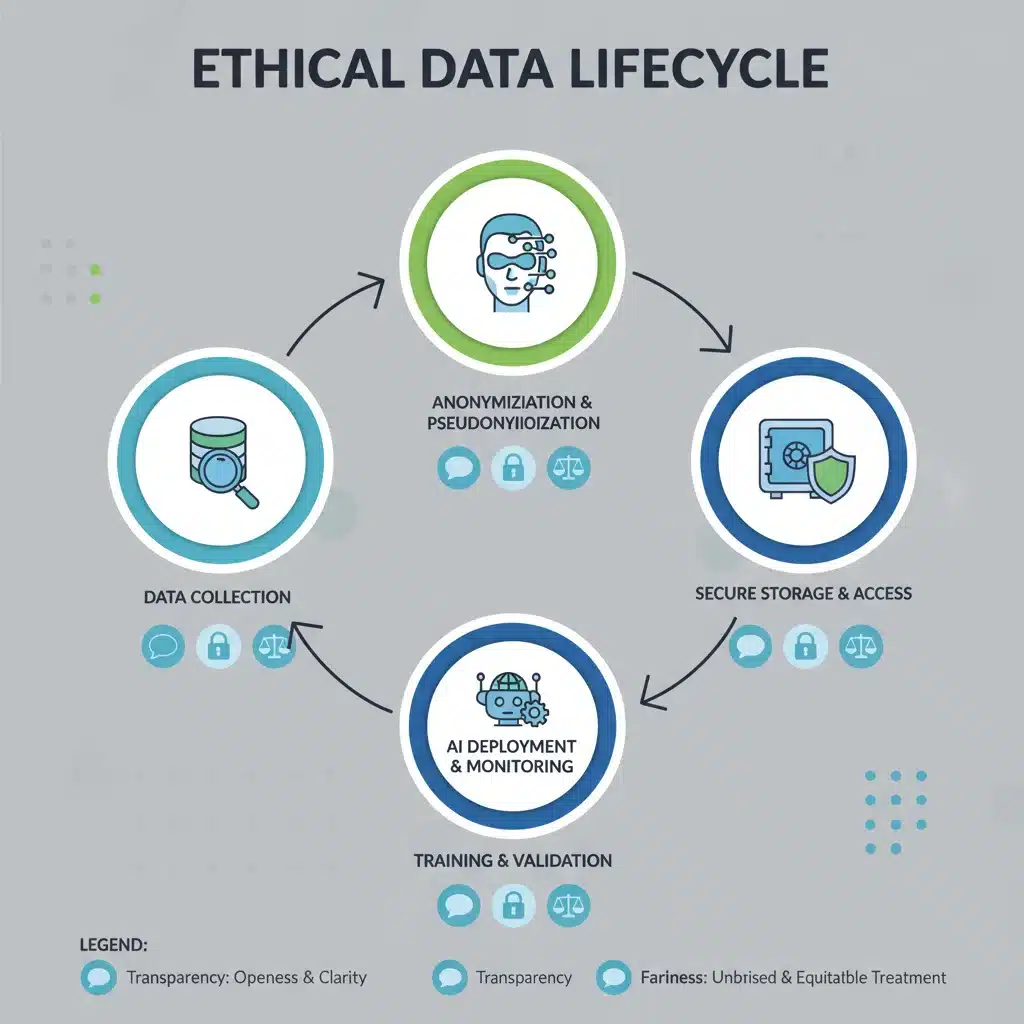
Building trust in AI is an ongoing journey, not a destination. For US organizations in 2026, it demands a holistic and unwavering commitment to ethical AI data sourcing and usage. This involves transparent data provenance, robust consent mechanisms, vigilant bias detection, meticulous data quality management, responsible data minimization, explainable AI, human oversight, and impregnable security.
By embedding these principles into their AI strategies and governance frameworks, organizations can unlock the full potential of AI while safeguarding individual rights, fostering societal well-being, and securing their long-term success. The future of AI is not just about what technology can do, but what it *should* do. By prioritizing ethical AI data practices, US organizations can lead the way in creating a future where AI serves as a force for good, earning the trust it needs to truly transform our world for the better.